
This article was published in Fine Music Magazine in May 2018 to highlight to a concert given by the Sydney Symphony entitled The Bernstein Songbook: A Musical Theatre Celebration. These edited extracts shed a light on upcoming program, The Life of a Composer with David Brett on Saturday 21 June at 8pm.
Nicky Gluch explores the relationship between British conductor John Wilson and Leonard Bernstein.
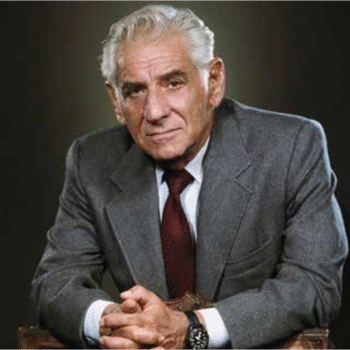
Leonard Bernstein and John Wilson were two men separated by oceans and time, whose fates are linked. With both being conductors, arrangers and lovers of the stage, it is no surprise that it was Wilson who was chosen to honour Bernstein in his centenary year, 2018. The greater mystery is how a man from Gateshead on Tyneside came to be so enraptured with the Broadway master. Perhaps Shakespeare holds the answer.
Shakespeare and Bernstein both wrote for the media of their time: Shakespeare for the theatre and Bernstein for the screen and Broadway stage. Both delved into complex tales, rich with politics and morals, yet neither seemed to preach. Both had a way of capturing their subjects that made them timeless and endlessly interpretable. Shakespeare’s plays have crossed the globe and have been translated, adapted, studied and adored. Bernstein’s songs, equally, have outlasted the films for which they were written. They have found their way into the canon and, it seems, into the heart of the Englishman, John Wilson.
Bernstein was 22 when he began his studies at Tanglewood, which launched what would be a stellar conducting career. Building on his training with Fritz Reiner, Bernstein (under the tutelage of Serge Koussevitzky) honed the skills that would make him a great classical interpreter. When he made his feted debut with the New York Philharmonic in 1943 (filling in for Bruno Walter who had taken ill) it was to conduct Schumann and Strauss. Less than a year later Bernstein’s music for the ballet Fancy Free made its first appearance and, within months, Fancy Free became the musical On The Town.
For the next 30 years Bernstein would juggle these two strands. All the music from the shows featured in the 1988 compilation album, The Bernstein Songbook, was written while Bernstein held major conducting positions. Indeed, Candide and West Side Story were written after Bernstein had been appointed music director of the New York Philharmonic. It is no wonder, then, that Wilson hails Bernstein as ‘the most complete musician’. Few musicians get to be thought of as ‘expert’ in multiple genres and few would doubt Bernstein’s multi-faceted genius. Bernstein, though, was not an island. In fact, it is perhaps because he was so good at absorbing everything around him that he was able to excel so quickly in both his roles.
It might have pleased Wilson to realise that he and Bernstein shared similar backgrounds. Neither was a child prodigy but rather a musical student with a passion for theatre: Bernstein mounting a production of The Cradle Will Rock and Wilson, aptly, West Side Story, based on Shakespeare’s Romeo and Juliet. Where Bernstein studied at Harvard and the Curtis Institute of Music, Wilson was a scholar at London’s Royal College of Music. They are thus both exemplars of the academic model, men who would have been privileged to cross paths with many a talented musician in their academic halls.
It is precisely the people Bernstein met and befriended and from whom he learned that explain his achievements. His influence on the 1950s and 1960s, and the way he seemed to embody the film age, would suggest a person who lived through it, but Bernstein was but a babe when Hollywood gained sound. The people with whom he mixed, however, were not.
The notable feature of the men Bernstein claims influenced him is that they were all older. Aaron Copland was born in 1900, Reiner in 1888 and Koussevitzky in 1874. Culturally they also covered a broad spectrum, with Copland another true American, Reiner of Hungarian origin and Koussevitzky (who might have crossed paths with Tchaikovsky) from near Moscow. Yet all were Jewish and had ended up on the East Coast of the United States, and Bernstein found himself in a world of mutual understanding with a plethora of knowledge to absorb.
Bernstein learned composition from Copland (although informally) and it was their friendship that secured him a place in Koussevitzky’s class. Who knows what would have happened if Koussevitzky hadn’t taken Bernstein under his wing and later made him his assistant? Perhaps he would not even have been there if Reiner hadn’t given him the encouragement to go down the conducting path. And yet, as Wilson insists, Bernstein is incomparable. ‘There’s nobody like Bernstein!’ says Wilson. ‘He was a complete one-off.’
Examining only his music it is clear why such an accolade holds true. Bernstein’s symphonies are complex and inter-textual, drawing on the Bible, W H Auden and the Jewish memorial prayer. They show a fascination with the written word and capture philosophical and emotional ideas in music, yet to many their complexity makes them somewhat inaccessible.
The same could never be said for his film and Broadway music. The tunes are memorable and the music inviting, but they are not light or what one would call ‘frothy’. Rather, they are imbued with that philosophical sensitivity Bernstein explores in his symphonies, it is just dished up in a way that makes it ‘mainstream’. His songs are so great because they confront what Shakespeare has encapsulated in his plays: ‘the human condition’.
In Peter Pan Wendy’s dream for Peter is heartfelt; she is every woman who has lost her grasp on the man she loved. The couple in Trouble in Tahiti are so genuinely unhappy, and their critique of suburbia is relevant to this day. Who could not delight in the joy of the three sailors in On the Town? Who could not relate to their thrill at being in that great city as they sing ‘New York, New York’?
Each work Bernstein wrote, whether it was an operetta, film score or musical, uses the orchestra in a way that is at once both perfectly suited to and indicative of his classical training. You may not realise it, but Candide is filled with the tricks of recitative. On the Town, Peter Pan and 1600 Pennsylvania Avenue are all so cleverly orchestrated that the instruments can vacillate between being melodic and being there for special effects.
Classical knowledge alone, however, would not make Bernstein’s works what they are. No, this is a man who understood big band and who loved jazz. These elements are woven and played with so that they fit their context; it’s the clicking in West Side Story, ‘Doo-Daa-Day-Day’ in Trouble in Tahiti. It’s a rhythmic skill that Wilson, as a percussionist, probably appreciated. He was certainly right to approach Bernstein’s ‘light’ scores as he would any other music. There is just so much there. ‘In the same way that I approach any of the music I conduct,’ Wilson explained, ‘I learn the scores in great detail and each time I approach a performance, I try to get to the next level of detail.’
How might Bernstein have wanted to be remembered? In Wilson’s eyes, as ‘a composer and conductor of significance’, words that only touch the surface of the effect Bernstein has had on the music world. His live performances as a conductor are so often watched by budding conductors in awe of the man they call ‘Lenny’. As a composer he produced music that confronts religion, race, politics and … joy.
The Life of a Composer with David Brett on Saturday 21 June at 8pm