
Elaine Siversen follows the ‘shipwrecking’ of love
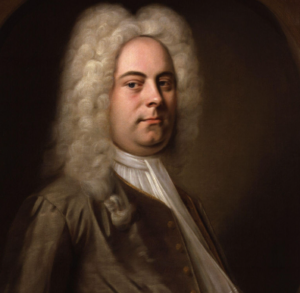
The brilliant musical scene in London in the early 18th century attracted many European composers and musicians who were hoping to be part of that success. One of these was Atillio Ariosti, who had already achieved fame as an opera composer with productions in Venice, Paris and London. At this time opera in London was notable for the rivalry between the two dominant composers of Italian opera, Giovanni Bononcini and George Handel.
Born in Bologna in Italy, Atillio Ariosti was a composer, cellist, viola d’amore player and harpsichordist. After working as a composer in various Italian cities, Ariosti’s reputation was established and, in 1697, he was invited to Berlin by Sophia Charlotte of Hanover, Queen of Prussia, and great-granddaughter of James I of England, Scotland and Wales.
While enjoying royal patronage, Ariosti wrote stage works for the court in Berlin, but the glittering London scene attracted him and he travelled there some time before 1724, probably when he was in his early 50s. He was readily accepted into London’s musical society and was appointed to share the directorship of the Royal Academy of Music with Handel and Bononcini.
Ariosti’s favourite instrument was the viola d’amore, for which he wrote 21 sonatas dedicated to King George I and published in London in 1724. Acclaimed as a performer of the viola d’amore, he was invited by Handel to play in an entr’acte in his opera Amadigi de Gaula.
Also in 1724 Ariosti published a series of six cantatas about the progress of love from its first joys to a final bitter ending. Collectively, the cantatas are titled The flowering and fading of love and it is for this work Ariosti is best known.
The first cantata, ‘La rosa’, depicting the rose as a symbol of love, is full of hope. In the next, ‘L’amore onesta’ (‘Honest love’), it seems some doubts are felt. ‘L’olma’ (The unhappy lover’s lament) compares the cruelty of nature to love and jealousy. In cantata 4, ‘La libertà aquistata’ (‘Freedom acquired through love’), the mood becomes darker, representing the darkening of the relationship and leading to the fifth and sixth cantatas that reflect the destruction of the love.
In Cantata 5, ‘Il naufragio’ (‘The shipwreck’), the tempestuous relationship as love fades is vividly portrayed as a shipwreck and the final cantata, ‘La gelosia’ (‘Jealousy’) transfers the former love into bitterness and misery.
Apart from the first joyful cantata, the series paints a picture of misery during what could have been a loving and enduring relationship. They show Ariosti’s understanding of this very human aspect of love, which can gradually be destroyed by doubt and jealousy. It’s a bleak picture that is all too common for many people who think they are in love, whether it be 300 years ago or today. Musically, it is a little-known masterpiece.
Baroque and Before: Atillio Ariosti in London on Friday 3 April at 8pm