
From the Archives – Between two worlds: Tchaikovsky’s orchestral works
This article appeared in the May 2020 issue of Fine Music Magazine
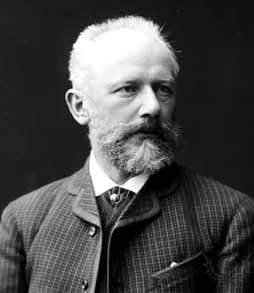
Despite being one of the most well-documented composers in history, Pyotr Ilyich Tchaikovsky is arguably one of the most misunderstood. Invariably popular with the general public, largely because of his more emotional works, the almost hypnotic effect that he was able to induce led to serious questioning of his true musical quality. As a result, his reputation has fluctuated greatly owing to changes in musical schools of thought, social mores, under- and over-evaluation, and even political regimes.
Two major interwoven strands stand out in Tchaikovsky’s life and works: his sensitive, initially sexually confused, inner life, and the conflict between his ‘Russianness’ — the native musical practices to which he had been exposed from childhood — and the European principles and musical forms of the St Petersburg Conservatory, from which he graduated in 1865. We can see more clearly now that Tchaikovsky’s great achievement was not only writing much wonderful music, but the reconciliation of these two stylistic universes, paving the way for other Russian composers to build their own individual styles.
One of the major stumbling blocks to this reconciliation was the issue of sonata form, the primary Western principle for building large-scale musical structures since the middle of the 19th century. Sonata form was not designed to accommodate the emotionally charged statements that Tchaikovsky wanted to make; indeed, the music he had heard all his life and his own innate penchant for melody both worked against it, not with it. Two alternatives, program music in general and the symphonic poem, were not entirely satisfactory, and it wasn’t resolved until a solution appeared in the shape of his Fourth Symphony. All his life, Tchaikovsky retained a love for this symphony, at the end of 1878 writing, “I adore terribly this child of mine; it is one of only a few works with which I have not experienced disappointment.”
Much has been written on the subject of Tchaikovsky’s homosexuality, which, although prohibited by law in many countries, including Russia, was a virtually unprosecuted crime for anyone possessing rank, respectability or money. That being the case, the wonder is that his life was virtually free of scandal, apart from a period of lewd speculation following the collapse of his marriage to the wildly unsuitable Antonina Miliukova, and the publication of a smearing article in Novoye Vremya (New Times) on 26 August 1878. Much of the negative criticism regarding his sexuality, which had an important bearing on how his music was perceived, happened first in Edwardian England, paradoxically one of the countries where the composer had been particularly honoured.
According to Tchaikovsky expert Brett Langston, “the caricature of a composer tortured by his sexual proclivities, reclusive and frequently suicidal through depressive neuroses is not based on the facts of Tchaikovsky’s life… (recent studies) show a surprisingly well-rounded individual, experiencing life’s triumphs and disappointments, a wariness of strangers but also great affection for his family and friends, a humorous and playful nature, to whom people frequently turned to for advice on musical and personal matters.”
David Ogilvie
Listen to Orchestral Classics, Sunday 26 October at 8pm