
By Stephen Gard
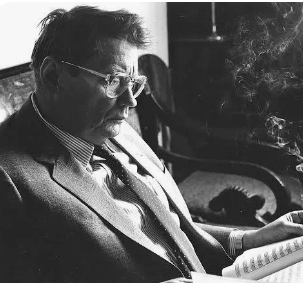
The repressive policies of Joseph Stalin cowed creativity in Soviet Russia and the quality of Russian music suffered accordingly … or so we of the West believed. Certainly, some Russian composers suffered but if they suffered in silence they did not suffer in vain. Composers published what was acceptable, set aside what was disapproved. The silence continued after Stalin: Russian insularity became a national trait.
Much of that ‘silenced’ music is now being heard. Works by Russian composers, some almost unknown to us, created during a totalitarian curfew, are bringing delight to the world and attracting applause.
‘Guided composing’
Composer Boris Tchaikovsky is among those ‘almost unknown to us’. Born in 1925, and unrelated to his great namesake, Tchaikovsky avoided the censure and penalties inflicted on Prokofiev, Shostakovich, Khachaturian, Myaskovsky, Kabalevsky and others.
Composers seek a response to their art; indifference is a withering blight. To have one’s work dismissed not by critics but by one’s government and its controlling arts administration as a ‘muddle’, a ‘jangle’ and ‘alien to the people’ is a killing blow to the spirit. Or is it?
Stalin did not murder or exile all his choicest artists; some he ‘guided’, following Vladimir Lenin’s doctrine:
Every artist … has the right to create freely according to his ideal, independently of everything. However, we are communists and we must not stand with folded hands and let chaos develop as it pleases. We must systemically guide this process and form its result.1
Stalin recognised the outstanding abilities of Prokofiev, Shostakovich, Khachaturian et al. Such eminent and attractive voices, internationally acclaimed, were surely attempting to share his power? Art can be persuasive; its subtext argues the convictions of the artist, often liberal and ungovernable. Shostakovich had been rebuked before and had seemingly kow-towed. Prokofiev had lived abroad for some time, making him even more suspect. His wife, Lina, had been imprisoned as a spy.
In 1948 the doctrinaire bureaucrat Andrei Zhdanov summoned Shostakovich and dozens of his peers to a conference, there to be rebuked for their ‘Formalist’ works. Rather than being ‘purged’ – the usual Soviet remedy for dissidence – they were stripped of their positions in teaching institutions, and it was forbidden to perform their ‘objectionable’ works. Stalin’s hatchet man was Tikhon Nikolayevich Khrennikov, Secretary of the Union of Soviet Composers, a body created by Stalin ‘to render these disciplines Socialist oriented’. Khrennikov himself was an accomplished composer, who, as late as 2006, was still defending Stalin’s actions and his own. However, some have acknowledged him as a moderating force, active behind the scenes in defending the interests of his colleagues but he did so when it did not endanger his own position.
A blessing
At this point, and against this background, Boris Tchaikovsky made his appearance. At the time of Zhdanov’s conference Tchaikovsky was a student of Shostakovich at the Moscow Conservatory. He, along with other students, was ordered to study with a new tutor and submit his previous compositions for assessment to ensure they were not ‘contaminated’. As one writer recalled, ‘Students waited in a queue, hurriedly deleting the sevenths and ninths from their scores.’
But Tchaikovsky had spent enough time studying with Shostakovich to receive his blessing:
Shostakovich imposed nothing upon me, rather he gave me direction. When I had achieved, in his opinion, the necessary level of professionalism, he allowed me much creative freedom.
Tchaikovsky also studied with ‘approved’ tutors, which did him no harm – he absorbed all the best traditions of the Russian Romantic School. He emerged not only technically accomplished, but versatile. And he refused to repudiate Shostakovich or his teaching.
Following the death of Stalin in 1953 there was a ‘cultural thaw’ in the Soviet Union. It wasn’t much felt abroad; this was the era of the Cold War and the ‘nuclear deterrent’. Russian music was silenced because it was contained rather than controlled. Like the country’s citizens, it was unable to emigrate and rarely reached beyond Soviet borders. Rarely – but not never.
Tchaikovsky flourished because ‘controllers’ like Khrennikov were looking elsewhere – at Russia’s younger composers, who were exploring serialism and aleatoric techniques, even electronica. Boris Tchaikovsky’s art occupied the middle ground. It lay between the Russian greats, like Rimsky-Korsakov, Mussorgsky and Borodin, to whose company had at last been admitted Shostakovich and his peers, and 12-tone rebels like Schnittke. In 1965 Russian musicologist Grigori Schneerson wrote of the Russian avant-garde:
Out of curiosity, the audiences will listen once or twice to these abstract works, resembling one another like two sheets of dry plaster … listen, as a tribute to fashion. But they will immediately forget the senseless hammering, the dry scholastic note-spinning, and they will prefer the lively, full-blooded, talented, and hence always diversified music.
The ‘lively, full-blooded’ music Schneerson preferred was, of course, the music of Boris Tchaikovsky and his ‘middle ground’ peers. They were approved because of what they were not.
Realities
Music like that of Rodion Shchedrin was exchanged, certainly, between the USA and the USSR. His Mischievous Ditties (Ozomye chastushki) in 1965 enjoyed a world premiere in New York under the baton of Leonard Bernstein, though the critics were rather cool about the work’s ‘official modernism’.
Tchaikovsky conceded that he had, at times, censored himself in order to conform.
If I saw that a new work I was composing didn’t have a chance to be performed, I would stop writing the piece. From the political point of view, I never had any problems. I never experienced oppression such as Shostakovich did with his Fourth Symphony. Before the Thaw in the Fifties, there was a general atmosphere of conformism, but I was very young and it didn’t really get to me.
Shostakovich’s son, the distinguished conductor Maxim Shostakovich, asked Tchaikovsky, ‘Did you ever compose music on order to have a free hand in other works?’
‘I rarely worked according to such agreements which made me feel ashamed,’ Tchaikovsky replied.
What about the influence of ‘socialist realism’?
‘I don’t feel its tenets influenced music at all because it’s not clear what it’s all about.’
Did that mean that you could obviate them?
I never accepted these norms. I can’t even explain what socialist realism is. It appears that everyone else understands it, in which case it can’t be very profound. Socialist realism is an artificial theory which can be interpreted in various ways.
The composer at work
Tchaikovsky graduated from the Moscow Conservatory in 1949. In 1953, coincidentally the year of Stalin’s death, he composed his Piano Trio. Critics praised its lyricism, approved its basis in tonality, and noted a Shostakovian influence. Its first performance was in 1956, with Tchaikovsky as the pianist.
If certain Russian composers had been barred from having a free hand with art music, Russian cinema offered them employment and a larger scope for expression. Tchaikovsky’s scores for the screen are almost as numerous as his ‘serious’ works. He was a teenager during those bitter years when the Nazis attempted to annihilate his nation. His score for the 1964 film While Defending the Front Line moved to the concert repertoire as The War Suite. This is not some stupendous, crashing orchestral tour de force but an understated, evocative narrative for clarinet and string quartet; the story of two young soldiers, Rusanov and Katya, lovers swept away in a torrent of battle and death.
Would Stalin have approved The Signs of the Zodiac, Boris Tchaikovsky’s cantata of 1974? Its mystical title alone, apart from its philosophically suspect text, might have earned its composer more than a rebuke. Tchaikovsky set four verses, one by each of four Russian poets whose voices span a century or so. What would Zhdanov have made of Tyutchev’s poem Silence, ‘which describes with heart-rending imagery the inescapable silence that dwells within the human soul’? Times had changed, but Tchaikovsky still avoided the oblique and the atonal. The Signs of the Zodiac is sublimely expressive and once again uses sparse instrumentation – harpsichord, strings, a solo soprano – making space for the cosmic clarity of the vocal line.
Tchaikovsky returned to the keyboard to perform his 1984 symphonic poem Juvenile. Influenced by the novel of Fyodor Dostoyevsky (better known as The Adolescent and in translation A Raw Youth), the score, written for a television special, has a place in the concert hall. The instrumentation departs from the strictly symphonic, including not only a piano but a viola d’amore, an instrument ideally suited to Tchaikovsky’s plaintive Slavic melodies.
Escape
1989 marked the year of ‘open-ness’. Russian émigrés hurried abroad in quest of, well, many things, one of them being the propagation of Russian music. In 1992 critic Paul Ingram was approached, as he emerged from London’s Underground, by a scruffy Muscovite singer who pressed upon him several CDs from the Russian Melodiya Record Company: a method of distribution not unfamiliar to self-publishers.
The recordings included works by Boris Tchaikovsky. Ingram listened and, like others at the time, was both puzzled and impressed. He sought more from this interesting composer, whose work at first seemed frozen in the Romantic era, though demonstrating a Modernist thaw. Ingram commends Tchaikovsky as a survivor, an evader of suppression and official contumely, declaring that his music matters. ‘It matters for the meaning, the preservation of what really matters, via art that’s of use to people, despite tough times. Music as a companion.’
A Newtonian Law of Motion might apply to this story of Russian music: ‘For every act of oppression, there is an equal and opposite reaction’ – or in this case, a refraction. Energy deflected, transformed, but not extinguished. There’s a law about that too.
Tchaikovsky was Professor of Composition at the Gnessin Academy of Music, where he was much admired by young composers Yuri Abdokov, Stanislav Prokudin, Petr Klimov, and Elena Astafieva. After his death in 1996 they and others formed the Boris Tchaikovsky Society, which not only promotes his music but produces a good many recordings.
Some of these are in our Fine Music library, and you can enjoy them in our Sunday Special in September every Sunday at 3pm.