
This article appeared in the June 2022 issue of Fine Music Magazine
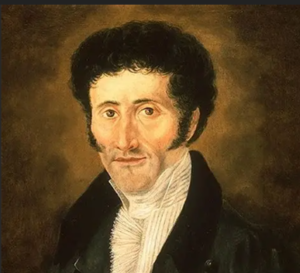
It is common, especially in a sporting context, to speak of someone skilled in three fields as being a ‘triple threat’. Ernst Theodor Wilhelm (he later substituted Amadeus for Wilhelm) Hoffmann, who died in June 1822, could be regarded thus. It is more appropriate, however, in terms of the range of his talents, to think of him as a true Renaissance man.
Hoffmann was born in Königsberg in 1776. His parents separated quite early in his life and he spent his childhood with his maternal grandmother. At the age of 16 he was sent to university to study law. This was against his wishes, but he came to enjoy the subject and ultimately ascended to the post of Kammergerichtsrat and sat in the Appeal Court. Another of his talents was as an artist, but his drawing skills saw him banished to the provinces (Plock, in New East Prussia) after caricatures he had drawn of the commanding officer of Posen fell into the wrong hands.
In Plock he coped with the relative isolation by writing and composing, then, in 1804, he secured a post in Warsaw. He regarded his time there as the happiest he had known: his work was exhausting but he still had time enough to compose in earnest, to buy instruments and sheet music for the musical society he set up and to dream of a career in music.
While he was in Warsaw his Symphony in E flat was premiered, on 3 August 1806, at a function which both celebrated the birthday of the King of Prussia and inaugurated a new concert hall. The symphony owed much to Haydn in its formal design and orchestration and, while not a notable success, displayed a number of original features.
Exactly ten years later his most successful opera, Undine, was premiered in Berlin and acclaimed, most notably by Carl Maria von Weber. In all, Hoffmann wrote nine operas and two masses, together with vocal, chamber, orchestral and piano compositions. He was, however, and probably knew himself to be, no Beethoven.
Hoffmann’s time in Warsaw was not to last, as Napoleon captured the city in November 1806. A year of hand-to-mouth existence in Berlin, also occupied by Napoleon, preceded his settling in Bamberg, where he began to write tales and reviews for the Leipzig newspaper Allgemeine musikalische Zeitung (AMZ): it is for these endeavours that he is best known.
As a reviewer his lasting legacy was recognising Beethoven as a genius and as the apotheosis of Romanticism in ‘the most Romantic of all the arts’, noting how his ‘magnificent’ Fifth Symphony ‘carries the listener on and on in a continually ascending climax into the ghostly world of infinity!’ He was also an early champion of Bach and Gluck, and full of praise for Mozart, both the Requiem and Don Giovanni.
The first Hoffmann tale published by AMZ was ‘Ritter Gluck’. Is the person who eventually identifies himself as the composer Gluck a ghost, or psychotic, or schizophrenic (or none of the above)? Hoffmann has been characterised as ‘Germany’s supreme storyteller’ and regarded as crucial to the development of the horror, fantasy and crime genres. His creations, such as the ‘eccentric, wild and clever Kapellmeister’ Kreisler and the dancing doll Coppélia, were taken up by composers such as Schumann, Delibes and Offenbach, and are probably his most lasting legacy.
Related programs: ETA Hoffmann.
Part 1: Thursday 8 January, 2:30pm
Part 2: Thursday 22 January, 2:30pm and ‘At the Opera’: Wednesday 14 January, 8pm.
By Paul Cooke