
‘If there’s anything you don’t like, tell me, and we’ll try and do something about it.’
‘Well, I don’t like your tie, for a start.’
An exchange that entered the history of popular music.
The setting was EMI’s Studio No 3 at Abbey Road.
The date was 6 June 1962.
The pair were suave and schoolmasterly EMI producer George Martin, 36 years old, ex–Royal Navy, Guildhall graduate and sassy and sardonic Liverpudlian guitarist George Harrison, late teens, high-school drop-out.
Within a year these two — and the three others present — would rank among the most notable people in Britain and soon after that, the world.
The exchange was not merely a spot of persiflage. It was a clash of cultures, however mild. George Harrison’s riposte was echt Liverpool back-chat. Martin’s concern was bourgeois courtesy in a three-piece suit — and tie. Sprawled on the studio floor lay the self-taught amateur — talented, adolescent-brusque; towering over him in every sense, the polite professional who would help to give birth to his Muse.
The story of The Beatles’ rise – meteoric in velocity, incandescence and impact – has been told often enough. Their influence was social, cultural, economic, artistic … and indelible.
What gives that Abbey Road scene its piquancy is that George Martin had a solid track record of success in the record industry, while The Beatles were just another crew of rough-hewn unknowns whose manager had wangled them an audition. But Martin sensed that these fellows had something.
Martin the medium
Without George Martin’s association with the Fab Four, few would know him outside the profession of music production. EMI audio engineer Geoff Emerick recalled that, though Lennon and McCartney respected Martin as producer, arranger and friend, they never regarded him as a creative equal. In time, if Martin ventured to suggest anything, Lennon or McCartney — or both — would ‘bite his head off’. Lennon, in his anarchic post-Beatle years, dismissed Martin as both a musical mediocrity and a meddler. He later apologised for his remarks, almost. It was, after all, Martin who married two versions of Lennon’s ‘Strawberry Fields Forever’, each recorded in a different key and at a different tempo, to produce the work which, in the words of one critic, ‘caused the boundaries of popular song to be renegotiated’.
It is equally arguable that a producer of different mien might not have possessed the empathy, either personally or artistically, to appreciate these self-assured youngsters, and we might never have heard any more of these ‘Beatles’ after the modest success of ‘Love Me Do’.
‘Well, he was very, very sympathetic,’ said Paul McCartney, rather cautiously, during a 1988 interview. ‘He would always listen to oddball ideas, like the dog-whistle at the end of ‘Sergeant Pepper’.
And at his One-On-One concert at Sydney’s Qudos Bank Arena in 2017 Sir Paul, wielding his iconic Hofner ‘violin’ bass guitar, told us, ‘No George Martin, no Beatles!’ and pointed upwards — presumably to the Valhalla where musical titans gather, for Sir George had died in March the previous year. We all applauded mightily.
Martin the man
Who was this sophisticated gentleman The Beatles were at first intimidated by but whom they came to trust, admire, consult and, in time, outgrow?
Martin was born a humdrum London suburb to a modest family. A self-taught pianist, for a time he played with a dance band, giving him a hands-on understanding of popular music-making, but he did not then choose music as a profession. Between 1943 and 1947 he was a Flying Officer in the Fleet Air Arm, gaining the distinguishing accent and demeanour of a gentleman. But the world of music was calling and he used his war veteran’s grant to study piano, oboe, arrangement and composition at London’s Guildhall School of Music and Drama, graduating in 1950.
He joined EMI as an assistant with its Parlophone label — a backwater the company had sidelined since acquiring it in 1923. By 1955 he was head of Parlophone and managed to raise its profile considerably, recording comedy artists like Flanders and Swann and cast recordings of London stage shows, Baroque ensembles (not popular at the time) and folk music gathered in the field — even early electronica.
He experimented with editing magnetic recording tape, which was just coming into studio use. Martin was responsible for Right, Said Fred and for the studio recordings of Peter Sellers and Spike Milligan and the Beyond the Fringe sketches. He became interested in the ‘skiffle’ craze and, as Parlophone’s Artists and Repertoire manager, began signing up promising acts. In 1961 he produced the instrumental ‘You’re Driving Me Crazy’ for the trad-jazz band The Temperance Seven. It reached Number One on the British popular music charts — Martin’s first Number One, but not his last.
George Martin’s acquaintance with novelty; his open-mindedness and wide experience of music and the entertainment industry; his willingness to experiment; his possession of that rare and special ability to spot potential talent in others, no matter how raw were qualities that would have brought him to attention in any case.
Long-playing ‘microgroove’ records had arrived, and the word ‘hi-fi’ had entered the language. Forty-five RPM singles and extended-play discs were fab things for teenagers to tote to parties and George Martin had long urged Parlophone to drop its 78 RPM format and adopt the new technology. Post-war affluence was filling living rooms with ‘stereos’. Since 1957 swinging kids had sported tiny transistor radios blaring out the latest from the Hit Parade.
Martin, star-maker
George Martin was just the man to prick up his ears — both musically and commercially — and note that the times were a-changing. And then came a phone call from Brian Epstein, a former retail record salesman with ‘Beatles’ on the brain.
In 1964 John Lennon gave The Beatles five years before their popularity waned. He got the time right, but the notoriety wrong. By 1969 they were famous beyond measure, but weary and claustrophobic. Each wanted to make other music, with other people — even if that included dumping George Martin. The band broke up amid a great deal of acrimony, chiefly to do with money and management. Epstein had babied them; the Beatles’ attempt to run themselves with their Apple Corps venture was a disaster.
Was there life for George Martin after The Beatles? Most certainly.
During the most successful of those fabulous years Martin went to EMI management and asked for a raise, pointing out the huge increase in company profits for which he had been at least partly responsible. Perhaps a small royalty? The company refused, so Martin and some other like-minded record producers resigned and established Associated Independent Recording (AIR).
This may have seemed suicidal, but it was a calculated professional risk. When Brian Epstein immediately advised EMI that The Beatles would work with no-one but George Martin AIR was contracted to produce Beatle records. Everyone was satisfied, and the tills went on tinkling merrily. This helped the rise of the ‘celebrity record producer’: Micky Most, Andrew Loog Oldham, Glyn Johns and the oddball Phil Spector among others.
AIR prospered. Martin was in high demand as a producer, yet he would not have lasted long in that hard-nosed industry if his contribution had been merely his celebrity. He worked with almost every major talent in the popular music world and, later, in film and television. He also produced Paul McCartney’s post-Beatle albums.
It’s an honour
Martin was knighted in 1996 for services to music ‘and popular culture’. Mick Jagger has been similarly honoured, and for similar reasons; some believes this diminishes the prestige of that rank. McCartney became Sir Paul for his charitable works. More significantly, in an age in which rock stars are awarded honorary doctorates for being rock stars, often by minor institutions seeking publicity, Oxford University in 2011 awarded Martin an honorary DMus. Sir George thus joined recipients of the calibre of Daniel Barenboim, Sir Harrison Birtwistle, Arvo Pärt, and Dame Felicity Lott.
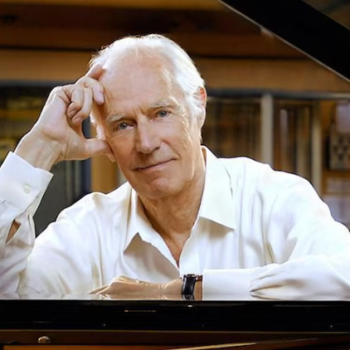
In his later years Sir George Martin became venerable, and perhaps a trifle absurd. He grew his hair long, a pair of thick white drapes each side of his tall, naked forehead. He appeared frequently in documentaries and even on chat shows, cheerfully aiding and abetting Beatle mythology — now a scrappy tract of fact, gossip, trainspotting, misunderstanding, distortion and sheer invention.
An ageing Sir Max Beerbohm once wryly described himself as ‘an interesting link with the past’. Martin had now assumed that mantle. Two Beatles were dead, a third was allegedly an imposter and the fourth had contributed only modestly to the band’s peaks of creativity. Martin was authentic. Martin had been part of the mix.
He now showcased himself as the wizard who had invented The Beatles — a pose that went virtually unchallenged, so admirable and beloved a figure had he become.
A more objective assessment might laud Martin as their midwife, whose contribution, and it is no small thing, was to allow them to invent themselves.
One need only listen to Pepperland to understand both George Martin’s musical strength and his weakness. Occupying the entire B-side of the Yellow Submarine LP, these seven tracks are orchestral incidental music for the animated film of 1968. They were all composed by Martin and are, at best, pleasant. Like much well-constructed film music, the Pepperland suite complements the images, but is, itself, negligible.
Martin arranged strings, brass and woodwind for Beatle songs, but always with either Lennon or McCartney looking over his shoulder. He admitted that the untutored McCartney had better ideas than his professional self for the string quartet used in ‘Yesterday’. Sir Paul is a gifted melodist, Sir George a competent scribe of others’ inspiration.
Perhaps George Martin’s most misconceived project was his In My Life album of 1998, comprising cover versions of Beatle songs performed by Hollywood movie stars like Goldie Hawn and Sean Connery, and comedians like Robin Williams and Billy Connolly. The result is regrettable, but at least a testament to his lasting achievement and charisma and the cachet of recording with him. In a sense, In My Life is also a reflection of his early Spike Milligan and other off-beat endeavours.
Not ears alone
In 1979 George Martin published his autobiography, All You Need Is Ears. Ironically, it was written ‘with’ Jeremy Hornsby; when it came to composing prose Martin himself needed the help of a collaborator. Much of the book consists of Martin justifying his professional decisions, especially during his Beatle days, plus some narky recollections of EMI overlords. His comments on the popular music industry are notable, especially when he commends the energy and innovation he knew there, and contrasts this unfavourably with the state of ‘serious’ music at that time.
When I started at EMI, my job was to make recordings of classical music. But it was the move into creative pop work that made the job truly worthwhile, and infinitely more interesting. It’s possible I won’t be remembered for it in a hundred years’ time, but it’s certain I won’t be remembered for making yet another recording of Beethoven’s Fifth Symphony. So many recordings have been made of that kind of work that there’s no way of contributing anything new.
There isn’t a single classical performer who is creating music in the way that a lot of pop performers are.
A prophetic remark in the light of today’s makers of ‘serious’ music, and their eclectic palette. In 1979 Martin implies that the impetus for change might come from the driving energy of popular music — uninstructed but ebullient — starting with, but not limited to, The Beatles. The Martin ears were connected to a particularly unique musical brain.
In the end
The Beatles had talent in abundance, but it was hampered. Had they attended a conservatorium and gained a BMus, it’s just possible we might never have heard of any of them — at least not with their name spelt out in blazing lights and their music shouting from every speaker. The Beatles had the music in them, but only a constrained means of expressing it. Being truly creative artists, they soon grew impatient with the limitations of guitars, piano, harmonica and drums. Martin was there to listen, to suggest, to realise their sometimes incoherent notions. Perhaps on that small stage a clash of post-war cultures was taking place, each wary of the other but seeing something worthwhile to explore.
And, returning to the account of that first meeting in Abbey Road, perhaps it’s no coincidence that in later photographs Sir George Martin is rarely seen wearing a tie.
By Stephen Gard