
Here is an eclectic selection of jazz musicians born in April, prepared by Louise Levy and Phillip Cant..
Duke Jordan
April 1, 1922 – August 2006
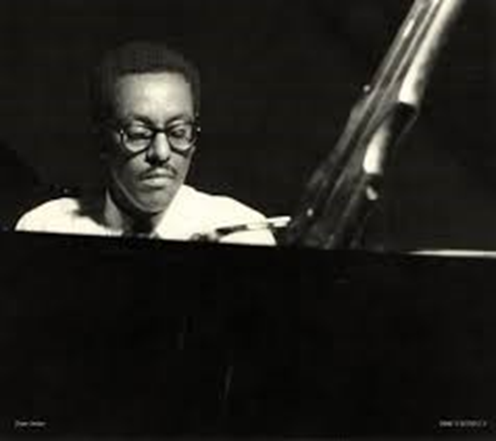
“We didn’t come here to set any fashions in music. We merely came to bring a much-needed touch of home to some lads who have been here a couple of years.”
Duke Jordan was an A-list pianist who was there at the birth of bebop. He was part of Charlie Parker’s classic quintet in 1947. He was regarded as one of the great early bebop pianists, the sound that he helped to create in the postwar era was something new, and it remains a cornerstone of jazz.
Larry Coryell
April 2, 1943 – February 19, 2017
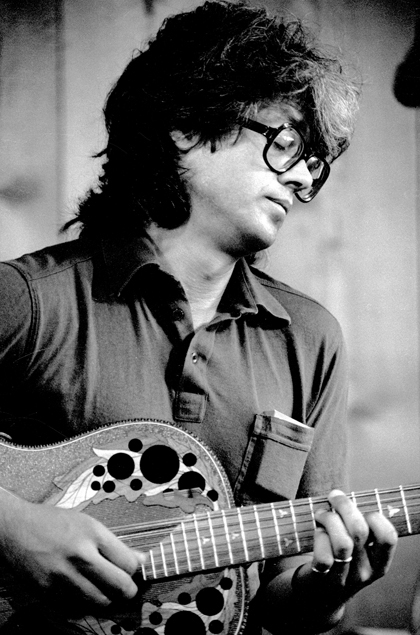
“All of music is connected, but a lot of people don’t see it that way.”
Larry Coryell (born Lorenz Albert Van DeLinder III) was an American jazz guitarist, widely considered the “godfather of fusion”. Alongside Gábor Szabó, he was a pioneer in melding jazz, country and rock music. Coryell was also a music teacher and a writer, penning a monthly column for Guitar Player magazine from 1977 to 1989. He collaborated with a number of other high-profile musicians, including John McLaughlin, Chick Corea, Billy Cobham, Al Di Meola, Paco de Lucía and others.
Bubber Miley
April 3, 1903 – May 20, 1932

James Wesley “Bubber” Miley was an American early jazz trumpet and cornet player, specializing in the use of the plunger mute. His growling, drunken wah-wah sounding trumpet playing was largely responsible for Duke Ellington’s early success and was the most prominent voice in Duke’s bands throughout the years of 1926 to 1928. Miley was influenced by King Oliver, but developed his own distinctive style of playing with mutes and derbys. He co-wrote “East St. Louis Toodle-Oo” and “Black and Tan Fantasy” with Duke Ellington.
Muddy Waters
April 4, 1913 – April 30, 1983

“If you got something you don’t want other people to know, keep it in your pocket.”
McKinley Morganfield, better known as Muddy Waters was an American blues singer-songwriter and musician who was an important figure in the post-World War II blues scene, and is often cited as the “father of modern Chicago blues”. His style of playing has been described as “raining down Delta beatitude”. Muddy Waters’ music has influenced various American music genres, including rock and roll and subsequently rock. The British band The Rolling Stones named themselves after Muddy Waters’ 1950 song, “Rollin’ Stone”. Jimi Hendrix recalled that “I first heard him as a little boy and it scared me to death”. Eric Clapton was a big fan of Muddy Waters growing up and his band Cream covered “Rollin’ and Tumblin'” on their 1966 debut album Fresh Cream.
Stanley Turrentine
April 5, 1934 – September 12, 2000

“My music has been called rock, be-bop, rhythm and blues, jazz fusion…I just let others describe what my music is, if I hear something and I like it, I’ll play it. I just consider myself playing good music.”
Stanley Turrentine was an American jazz tenor saxophonist. He began his career playing R&B for Earl Bostic and later soul-jazz recording for the Blue Note label from 1960, touched on jazz fusion during a stint on CTI in the 1970s. He was described by critic Steve Huey as “renowned for his distinctively thick, rippling tone [and] earthy grounding in the blues.” Turrentine was married to organist Shirley Scott in the 1960s, with whom he frequently recorded, and was the younger brother of trumpeter Tommy Turrentine.”
Gerry Mulligan
April 6, 1927 – January 20, 1996

“So I played alto for quite a while until I saved up the money for the baritone.”
Gerry Mulligan was an American jazz saxophonist, clarinetist, composer and arranger. Though Mulligan is primarily known as one of the leading jazz baritone saxophonists – playing the instrument with a light and airy tone in the era of cool jazz – he was also a significant arranger, working with Claude Thornhill, Miles Davis, Stan Kenton, and others. Mulligan’s pianoless quartet of the early 1950s with trumpeter Chet Baker is still regarded as one of the best cool jazz groups. Mulligan was also a skilled pianist and played several other reed instruments. Several of his compositions, such as “Walkin’ Shoes” and “Five Brothers”, have become jazz standards.”
Billie Holiday
April 7, 1915 – July 17, 1959
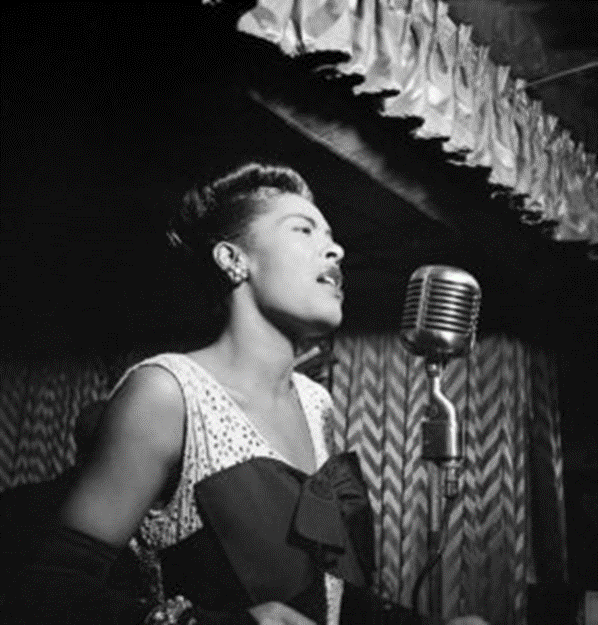
“Don’t threaten me with love, baby. Let’s just go walking in the rain. If I’m going to sing like someone else, then I don’t need to sing at all. Sometimes it’s worse to win a fight than to lose.”
Billie Holiday was an American jazz musician and singer-songwriter with a career spanning nearly thirty years. Nicknamed “Lady Day” by her friend and music partner Lester Young, Holiday had a seminal influence on jazz music and pop singing. Her vocal style, strongly inspired by jazz instrumentalists, pioneered a new way of manipulating phrasing and tempo. Holiday was known for her vocal delivery and improvisation skills, which made up for her limited range and lack of formal music education. While there were other jazz singers with equal talent, Billie Holiday had a voice that captured the attention of her audience.
Carmen McRae
April 8, 1922 – November 10, 1994

“Blues is to jazz what yeast is to bread – without it, it’s flat.”
Carmen Mercedes McRae was an American jazz singer. She is considered one of the most influential jazz vocalists of the 20th century and is remembered for her behind-the-beat phrasing and ironic interpretation of lyrics. McRae was inspired by Billie Holiday, but she established her own voice. She recorded over sixty albums and performed worldwide.
Monty Sunshine
April 9, 1928 – November 30, 2010
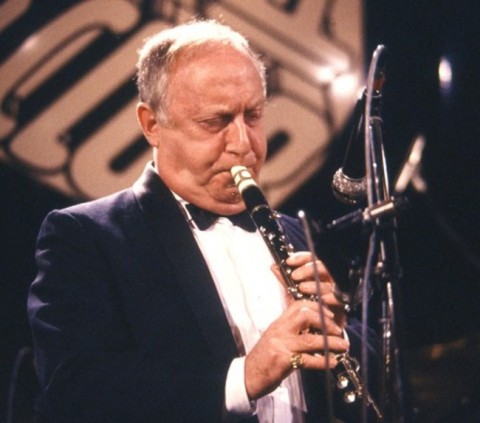
“Blues is to jazz what yeast is to bread – without it, it’s flat.”
Monty Sunshine was an English jazz clarinettist, who is known for his clarinet solo on the track “Petite Fleur”, a million seller for the Chris Barber Jazz Band in 1959. His great-great-grandparents arrived from Romania and had anglicised their surname to Sunshine. During his career, Monty worked with the Eager Beavers, the Crane River Jazz Band, Beryl Bryden, George Melly, Chris Barber, Johnny Parker, Diz Disley and Donegan’s Dancing Sunshine Band. Along with Lonnie Donegan, Jim Bray and Ron Bowden, formed the back line of what was to become the embryo Chris Barber Jazz Band.
Chris Abrahams
April 9, 1961
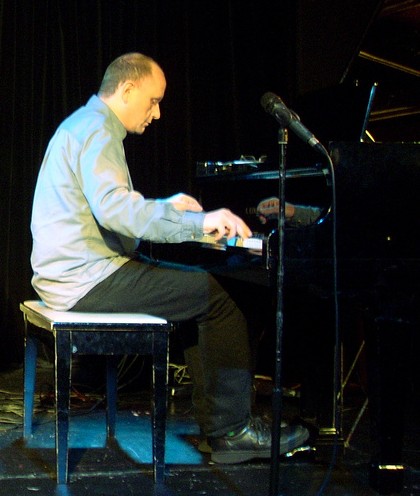
“We’re making it up as we go along … that’s how we make music.”
Christopher Robert Lionel Abrahams is a New Zealand-born, Australian-based musician. He is a founding mainstay member of experimental, jazz trio the Necks (1987–present) and collaborated with Melanie Oxley as a soul pop duo (1989–2003). The Necks were formed as a jazz trio by Abrahams on piano, keyboards, organ and guitar with former bandmate, Swanton, on bass guitar and double bass, and Tony Buck on drums, percussion and guitar. Their music has been described as “abstract, improvised, jazzy mood music” and “ambient”, “free-jazz” and “industrial noise”.
Claude Bolling
April 10, 1930 – December 29, 2020
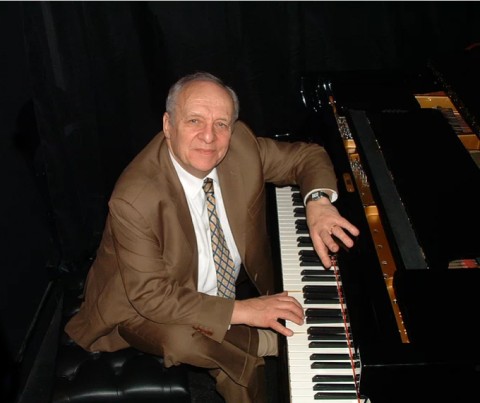
“Each musician has his own voice, and I write for that.”
Claude Bolling was a French jazz pianist, composer, arranger, and occasional actor. A child prodigy, by the age of 14 he was playing jazz piano professionally, with Lionel Hampton, Roy Eldridge, and Kenny Clarke. Bolling’s books on jazz technique show that he did not delve far beyond bebop into much avant-garde jazz. He was a major part of the traditional jazz revival in the late 1960s, and he became friends with Oscar Peterson. He wrote music for over one hundred films and was also noted for a series of “crossover” collaborations with classical musicians. His Suite for Flute and Jazz Piano Trio with Jean-Pierre Rampal, a mix of Baroque elegance with modern swing, has been a top seller for many years, and was followed up by other works in the same vein.
Jakob Bro
April 11, 1978

Jakob Bro is a Danish guitarist and composer. Bro leads a trio with Joey Baron and Thomas Morgan. In the fall of 2016 the trio released the album Streams (ECM). Bro also works with Palle Mikkelborg and Bro/Knak, a collaboration with the Danish electronica producer Thomas Knak.
Herbie Hancock
April 12, 1940
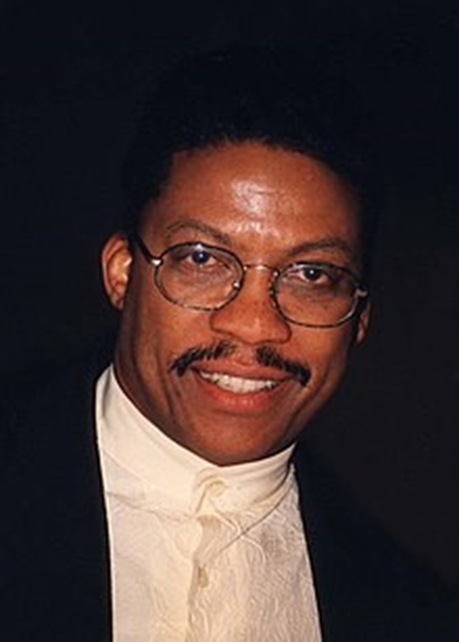
“Creativity and artistic endeavors have a mission that goes far beyond just making music for the sake of music.”
Herbie Hancock is an American pianist, keyboardist, bandleader, composer and actor. Hancock started his career with Donald Byrd. He shortly thereafter joined the Miles Davis Quintet, where he helped to redefine the role of a jazz rhythm section and was one of the primary architects of the post-bop sound. In the 1970s, Hancock experimented with jazz fusion, funk, and electro styles using a wide array of synthesizers and electronics. Hancock’s best-known compositions include “Cantaloupe Island”, “Watermelon Man”, “Maiden Voyage”, and “Chameleon”, all of which are jazz standards. He began playing the piano at the age of seven, taking classical piano lessons, and his talent was recognized early on. During his teenage years, Herbie Hancock did not have a jazz teacher. He developed his ear and sense of harmony by listening to Hard Bop by Art Blakey’s the Jazz Messengers, Birth of the Cool by Miles Davis, and the recordings of jazz pianists, including George Shearing, Erroll Garner, Bill Evans and Oscar Peterson.
Teddy Charles
April 13, 1928 – April 16, 2012
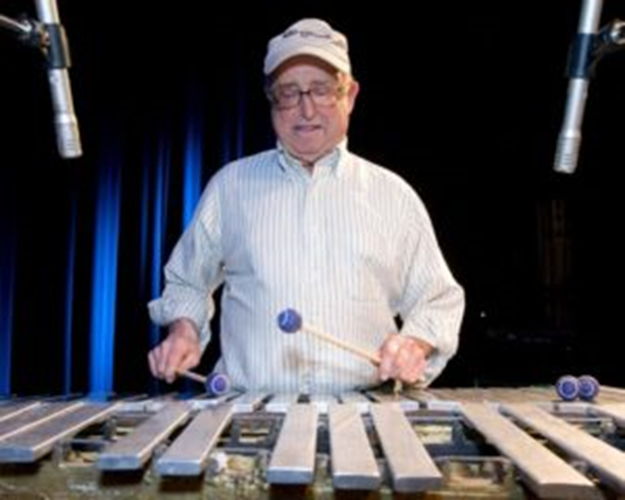
“It’s the same in art, not just jazz. There’s no way you can fake it.”
Teddy Charles was an American jazz musician and composer whose instruments were the vibraphone, piano, and drums. He studied at the Juilliard School of Music as a percussionist. Later he began to record and made personal appearances as Teddy Cohen with bands as a vibraphonist, writing, arranging, and producing records. In 1951 he changed his last name to Charles. He was a studio musician for Miles Davis, Charles Mingus, Shelly Manne, and Dion.
Shorty Rogers
April 14, 1924 – November 7, 1994
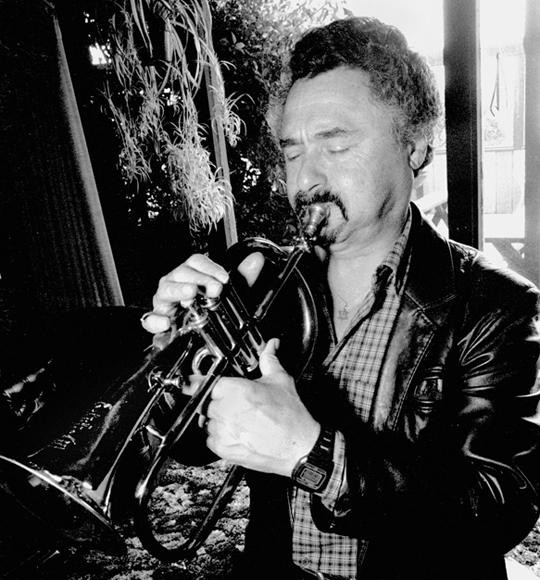
“When Bird [Charlie Parker] came on the scene, it was just as shocking as in the Bible: everything was dark, and then the light appeared for the first time.”
Milton “Shorty” Rogers (born Milton Rajonsky) was an American jazz musician, one of the principal creators of West Coast jazz. He played trumpet and flugelhorn and was in demand for his skills as an arranger. He worked first as a professional musician with Will Bradley and Red Norvo. From 1947 to 1949, he worked extensively with Woody Herman and in 1950 and 1951 he played with Stan Kenton. In 1957, Rogers composed the music for the Friz Freleng cartoon Three Little Bops, notably the first Warner Bros. cartoon short not to have music by either Carl Stalling or Milt Franklyn. His other film work included the scores to Fools (1970), The Teacher (1974), The Specialist (1975), Dr. Minx (1975) and The Return of the Mod Squad (1979).
Gene Ammons
April 14, 1925 – August 6, 1974
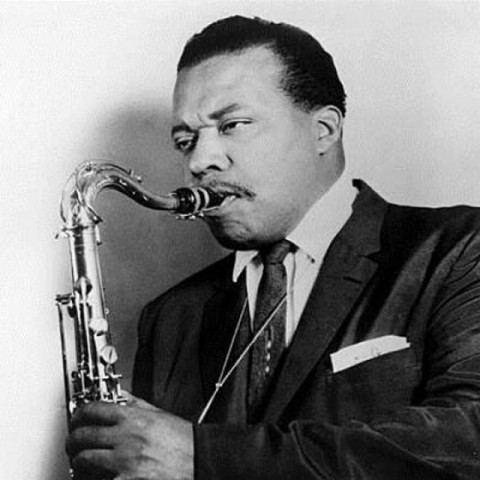
“There’s nothing wrong with jazz education that couldn’t be fixed by firebombing all the major jazz schools”
Eugene “Jug” Ammons, also known as “The Boss”, was an American jazz tenor saxophonist. The son of boogie-woogie pianist Albert Ammons, Gene Ammons is remembered for his accessible music, steeped in soul and R&B. Ammons was one of the founders of the Chicago school of tenor saxophone. Ammons’s playing style showed influences from Lester Young as well as Ben Webster. These artists had helped develop the sound of the tenor saxophone to higher levels of expressiveness. Ammons, together with Dexter Gordon and Sonny Stitt, helped integrate their developments with the emerging “vernacular” of the bebop movement, and the chromaticism and rhythmic variety of Charlie Parker is evident in his playing.
Marquis Hill
April 15, 1987
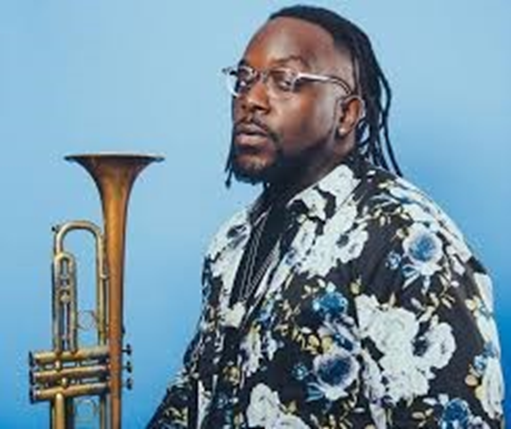
“Contemporary and classic jazz, hip-hop, R&B, Chicago house, neo-soul – to Hill, they’re all essential elements of the profound African-American creative heritage he’s a part of. “It all comes from the same tree,” he says. “They simply blossomed from different branches.”
Award-winning trumpeter, composer, and bandleader Marquis Hill is a highly skilled jazz musician with a bent toward soulful post-bop, hip-hop, R&B, soul, and blues. As evidenced by 2016’s The Way We Play, his is a beat-conscious music where the spirits of Louis Armstrong and Miles Davis inhabit the same sonic universe as Erykah Badu, Kendrick Lamar, Sly Stone, and even George Clinton.
Bessie Smith
April 15, 1894 – September 26, 1937

“It’s a long old road, but I know I’m gonna find the end.”
Bessie Smith was an African-American blues singer widely renowned during the Jazz Age. Nicknamed the “Empress of the Blues”, she was the most popular female blues singer of the 1930s. Inducted into the Rock and Roll Hall of Fame in 1989, she is often regarded as one of the greatest singers of her era and was a major influence on fellow blues singers, as well as jazz vocalists.
Songs like “Jail House Blues”, “Work House Blues”, “Prison Blues”, “Sing Sing Prison Blues” and “Send Me to the ‘Lectric Chair” dealt critically with social issues of the day such as chain gangs, the convict lease system and capital punishment. “Poor Man’s Blues” and “Washwoman’s Blues” are considered by scholars to be an early form of African-American protest music.
Esbjörn Svensson
April 16, 1964 – June 14, 2008

“He was following the music inside himself. His music inspired people in all corners of the world”
Esbjörn Svensson was a Swedish jazz pianist and founder of the jazz group Esbjörn Svensson Trio, commonly known as e.s.t. He was introduced to both classical music and jazz very early in life through his mother, a classical pianist, and his father, a jazz enthusiast, and first showed interest in classical music. In his teenage years, he developed an interest in rock music before going back to classical music, and finally making his way towards jazz. At the age of 16, Svensson went to a music college, where he took piano lessons. He later studied at the Royal College of Music, Stockholm, for four years. In 1990, Svensson established his own jazz combo and in 1993 released the debut album, When Everyone Has Gone. Svensson became one of Europe’s most successful jazz musicians at the turn of the 21st century before dying, at the age of 44, in a scuba diving accident.
Chris Barber
April 17, 1930 – March 2, 2021

“We play happy music, and we make people happy. That’s why they like us.”
Donald Christopher Barber OBE was an English jazz musician, best known as a bandleader and trombonist. He helped many musicians with their careers and had a UK top twenty trad jazz hit with “Petite Fleur” in 1959. These musicians included the blues singer Ottilie Patterson, who was at one time his wife, and Lonnie Donegan, whose appearances with Barber triggered the skiffle craze of the mid-1950s and who had his first transatlantic hit, “Rock Island Line”, while with Barber’s band. He provided an audience for Donegan and, later, Alexis Korner, and sponsored African-American blues musicians to visit Britain, making Barber a significant figure in launching the British rhythm and blues and “beat boom” of the 1960s.
Johnny St Cyr
April 17, 1890 – June 17, 1966

Johnny St. Cyr was an American jazz banjoist and guitarist. He was one of the original pioneers of jazz music, playing banjo and guitar in the bands of Louis Armstrong, King Oliver, Jelly Roll Morton, Johnny Dodds and Kid Ory, among others. He started the idea of banjo with jazz, a combination whose impact changed the banjo world during the Jazz years, and continues to have a marked effect. He is best known for writing the songs “Messin’ Around”, “Buddy’s Habit”, “High Fever” and “Oriental Strut”, and for playing the banjo and/or guitar on the Louis Armstrong Hot Five and Hot Seven Sessions. St. Cyr played a Martin guitar, a four-string tenor banjo, or a six-string banjo guitar, making his own instrument by attaching the neck of a guitar to a banjo. The result was a louder banjo with a jazz tone; his sound is notably different from other banjo music recorded in that era. He used a hard, thick pick to produce the smooth rhythm guitar sound and hard, clean single string lines that typified his style – he made his own picks from toothbrush handles.
Madeleine Peyroux
April 18, 1974
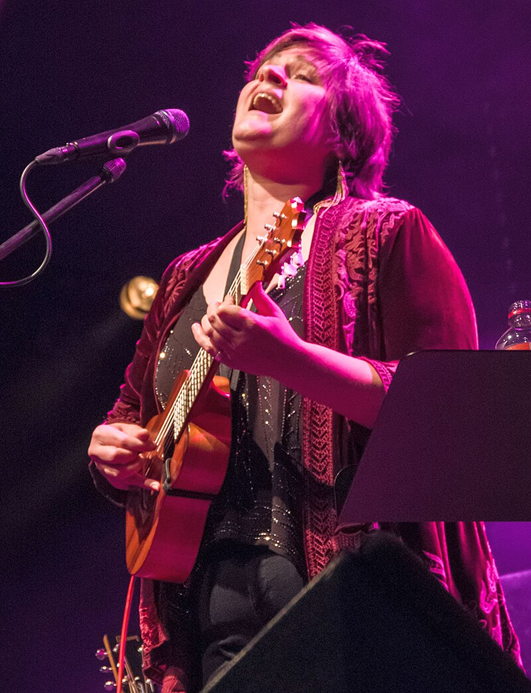
“The wonderful thing about Jazz is its willingness to take chances.”
Madeleine Peyroux is an American jazz singer and songwriter, As a child, she listened to her father’s old records and learned to play her mother’s ukulele. Peyroux began her career as a teenager on the streets of Paris. She sang vintage jazz and blues songs before finding mainstream success in 2004 when her album Careless Love sold half a million copies. She is noted for her vocal style, which is highly reminiscent of Billie Holiday. Madeleine also has qualities similar to Ella Fitzgerald. Though Peyroux may remind some listeners of Holiday, there are differences, and she has her own sense of phrasing and interpretation. In her guitar playing, Peyroux eschews the use of a plectrum or fingerpicks, and uses effects sparingly.
Mike Armando
April 19, 1951
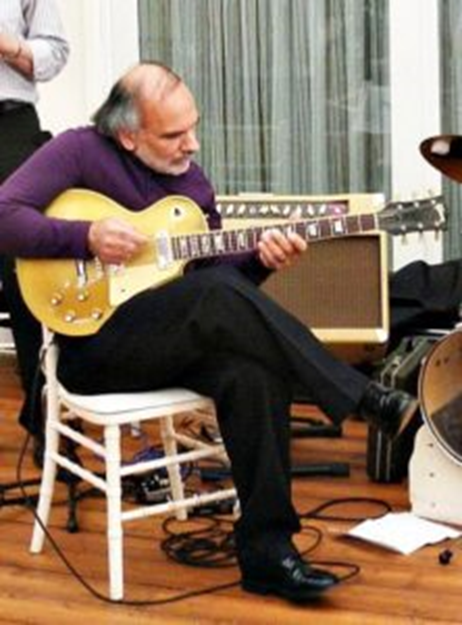
Jazz/blues guitarist Mike Armando was born and grew up in Brooklyn & Woodhaven Queens, NY. He attended Franklin K. Lane High School. In the early years, Mike joined the U.S. Navy during the Viet Nam War. He served his country for 4 years and still performed when he had time. Times were tough but he still kept playing his music.
Lionel Hampton
April 20, 1908 – August 31, 2002

“Playing is my way of thinking, talking, communicating.“
“Every day I look forward to getting with my instruments, trying new things.”
Lionel Leo Hampton was an American jazz vibraphonist, percussionist, and bandleader. He worked with jazz musicians from Teddy Wilson, Benny Goodman, and Buddy Rich, to Charlie Parker, Charles Mingus, and Quincy Jones. In 1992, he was inducted into the Alabama Jazz Hall of Fame, and he was awarded the National Medal of Arts in 1996. During the 1920s, while still a teenager, Hampton took xylophone lessons from Jimmy Bertrand and began to play drums.
Slide Hampton
April 21, 1932
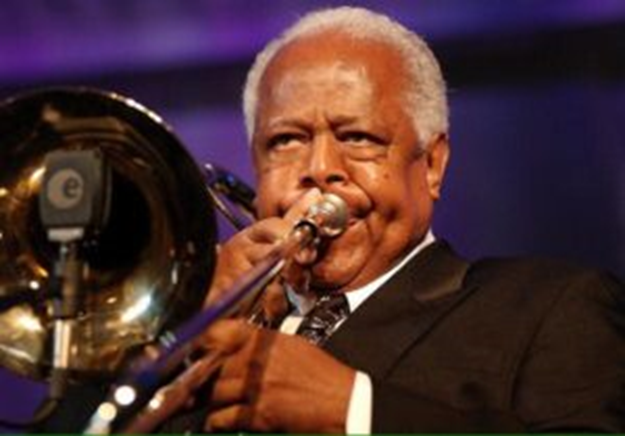
“You can have great musicians, but they don’t necessarily play together.”
Slide Hampton was an American jazz trombonist, composer and arranger. A master composer, arranger and uniquely gifted trombone player, Hampton’s career is among the most distinguished in jazz. Slide Hampton’s distinguished career spans decades in the evolution of jazz. At the age of 12 he was already touring the Midwest with the Indianapolis-based Hampton Band, led by his father and comprising other members of his musical family. By 1952, at the age of 20, he was performing at Carnegie Hall with the Lionel Hampton Band.
Charles Mingus
April 22, 1922 – January 5, 1979

“Creativity is more than just being different. Anybody can plan weird; that’s easy. What’s hard is to be as simple as Bach. Making the simple, awesomely simple, that’s creativity.”
Charles Mingus was an American jazz double bassist, pianist, composer and bandleader. A major proponent of collective improvisation, he is considered to be one of the greatest jazz musicians and composers in history, with a career spanning three decades and collaborations with other jazz legends such as Louis Armstrong, Duke Ellington, Charlie Parker, Dizzy Gillespie, Dannie Richmond, and Herbie Hancock.
Alan Broadbent
April 23, 1947
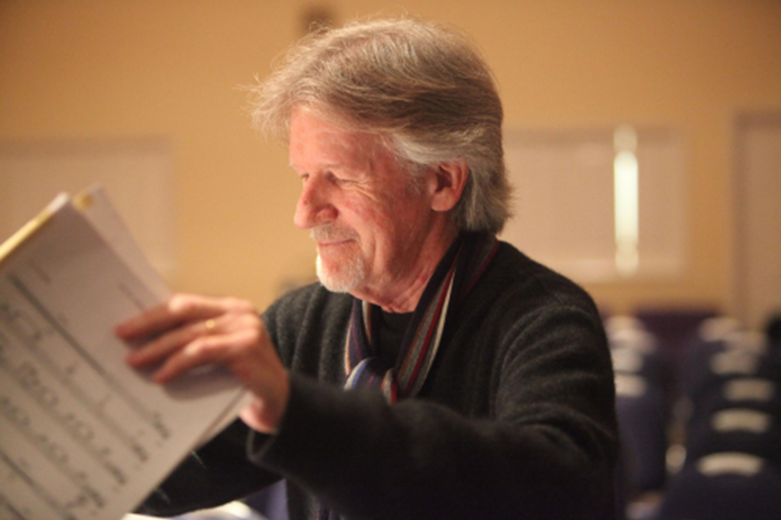
“My piano technique was in disrepair. I couldn’t play a scale then to save my life. It seems to me, listening back, that I’m playing the piano. Now, I feel as if I am the piano.”
Alan Leonard Broadbent MNZM is a New Zealand jazz pianist, arranger, and composer. Broadbent studied piano and music theory in his own country, but in 1966 went to the United States to study at the Berklee College of Music. During the 1990s he recorded on Natalie Cole’s album Unforgettable… with Love, then became her pianist and conductor for the tour. His arrangement for her video “When I Fall in Love” won the Grammy Award for Best Orchestral Arrangement Accompanying a Vocal. During the 1980s and 1990s, he recorded with Charlie Haden’s Quartet West. He wrote arrangements for Glenn Frey’s album After Hours and for Paul McCartney’s album Kisses on the Bottom. He has worked as conductor for Diana Krall.
Joe Henderson
April 24, 1937 – June 30, 2001
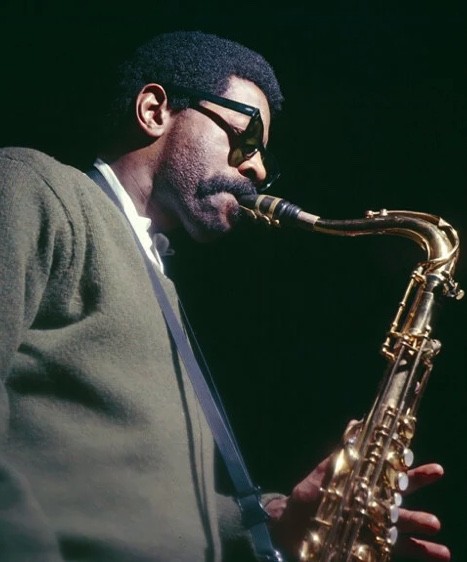
“It’s not just getting up and looking hip on the bandstand; the music comes first and everything else comes after.”
Joe Henderson was an American jazz tenor saxophonist and very occasional flute player. In a career spanning more than four decades, Henderson played with many of the leading American players of his day. He was encouraged by his parents and older brother James T. to study music. He dedicated his first album to them “for being so understanding and tolerant” during his formative years. Early musical interests included drums, piano, saxophone and composition. He was particularly enamoured of his brother’s record collection. Charlie Parker became his greatest inspiration. In 1967, there was a brief association with Miles Davis’s quintet featuring Herbie Hancock, Wayne Shorter, Ron Carter and Tony Williams, although the band was never recorded. Henderson’s adaptability and eclecticism would become even more apparent in the years to follow. He also had a brief association with Blood, Sweat & Tears in 1971.
Ella Fitzgerald
April 25, 1917 – June 15, 1996
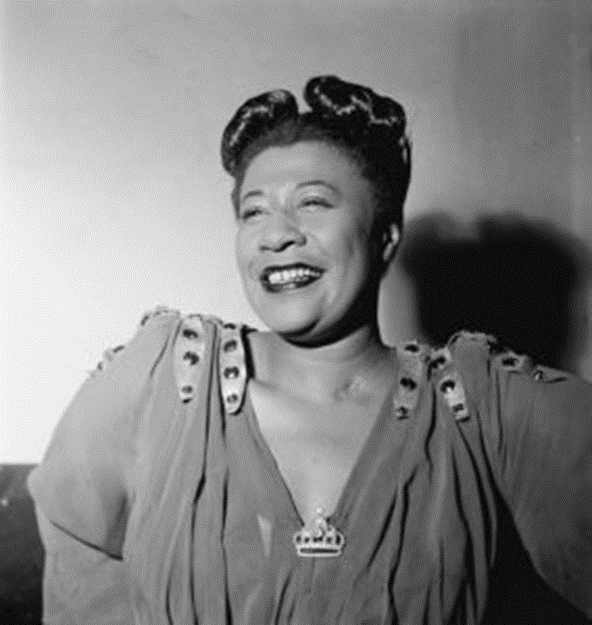
“It isn’t where you came from; it’s where you’re going that counts.”
Ella Fitzgerald was an American jazz singer, sometimes referred to as the First Lady of Song, Queen of Jazz, and Lady Ella. She was noted for her purity of tone, impeccable diction, phrasing, timing, intonation, and a “horn-like” improvisational ability, particularly in her scat singing.
Jimmy Giuffre
April 26, 1921 – April 24, 2008

“Well, it goes with my personality, I’m sure. I won’t accept the thing that I am an introverted personality, which some have tried to make me out. I have gone through periods, and I won’t say that I have shaken them off completely, but I have gone through periods where I was quiet: I like the pastoral, the country; I like Debussy and Delius – I like peaceful moods.”
Jimmy Giuffre was an American jazz clarinetist, saxophonist, composer, and arranger. He is notable for his development of forms of jazz which allowed for free interplay between the musicians, anticipating forms of free improvisation.
Lionel Loueke
April 27, 1973
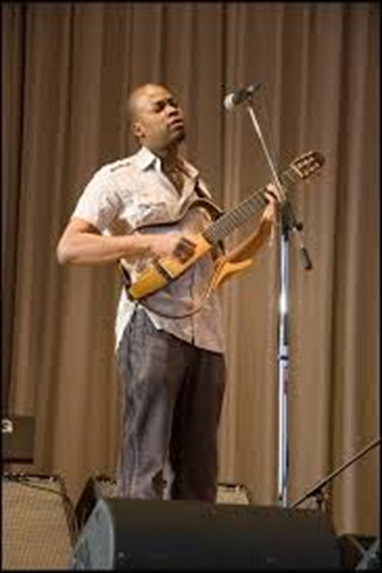
“He studied music at home and listened, enjoying the sounds of the American master players. With that came more revelations. It didn’t intimidate Loueke. It made him more hungry to learn.”
Lionel Loueke is a guitarist and vocalist born in Benin. He moved to Ivory Coast in 1990 to study at the National Institute of Art. The American School of Music in Paris from 1994 to 1998, Berklee College of Music from 1999 to 2001, and the Thelonious Monk Institute from 2001 to 2003.
Blossom Dearie
April 28, 1926 – February 7, 2009
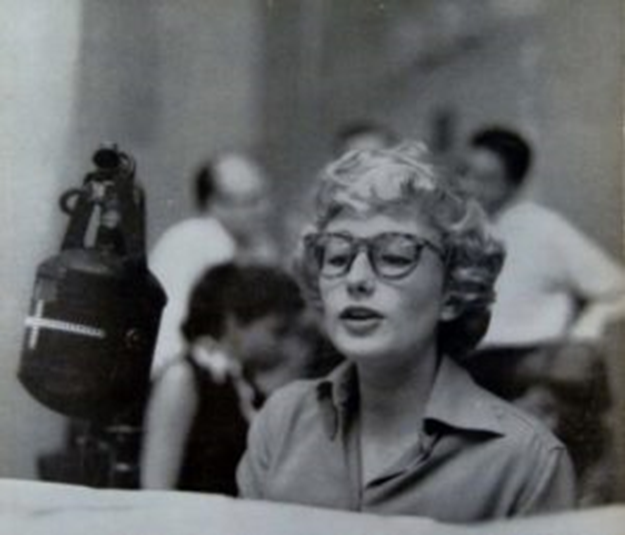
“A lot of musicians say that they couldn’t play and sing at the same time—and singers say that they couldn’t sing and play at the same time. Well, with me it’s all just one and the same thing. I don’t like to do either one separately.”
Blossom Dearie was an American jazz singer and pianist. She had a recognizably light and girlish voice. Dearie performed regular engagements in London and New York City over many years and collaborated with many musicians, including Johnny Mercer, Miles Davis, Jack Segal.
Duke Ellington
April 29, 1899 – May 24, 1974
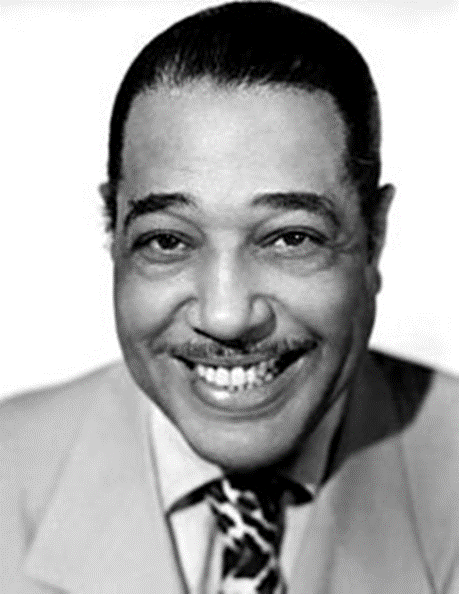
“There are 2 rules in life:
Number 1- Never quit
Number 2- Never forget rule number 1.”
Duke Ellington was an American composer, pianist, and leader of a jazz orchestra, which he led from 1923 until his death over a career spanning more than six decades. Ellington was based in New York City from the mid-1920s onward and gained a national profile through his orchestra’s appearances at the Cotton Club in Harlem. A master at writing miniatures for the three-minute 78 rpm recording format, Ellington wrote or collaborated on more than one thousand compositions; his extensive body of work is the largest recorded personal jazz legacy, and many of his pieces have become standards. Although a pivotal figure in the history of jazz, “the most significant composer of the genre”, Ellington himself embraced the phrase “beyond category”, considering it a liberating principle, and referring to his music as part of the more general category of American Music.
Percy Heath
April 30, 1923 – April 28, 2005
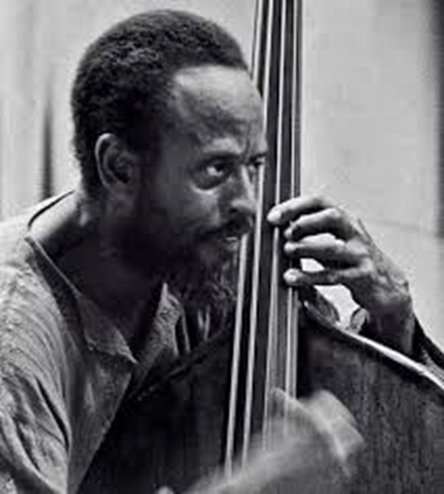
” Jazz is letting everybody do his or her thing with the music.”
Percy Heath was an American jazz bassist, brother of saxophonist Jimmy Heath and drummer Albert Heath, with whom he formed the Heath Brothers in 1975. Heath played with the Modern Jazz Quartet throughout their long history and also worked with Miles Davis, Dizzy Gillespie, Charlie Parker, Wes Montgomery, and Thelonious Monk. He started playing violin at the age of eight, and after the war he bought a stand-up bass. Soon he was playing in the city’s jazz clubs with leading artists. After moving to from Philadelphia to New York in the late 1940s, Percy and Jimmy Heath found work with Dizzy Gillespie’s groups. Members of the Gillespie big band, pianist John Lewis, drummer Kenny Clarke, Milt Jackson, and bassist Ray Brown (replaced by Heath), decided to form a permanent group which became The Modern Jazz Quartet in 1952. The MJQ played regularly until it disbanded in 1974; it reformed in 1981 and last recorded in 1993.