
James Nightingale celebrates the music of Luciano Berio
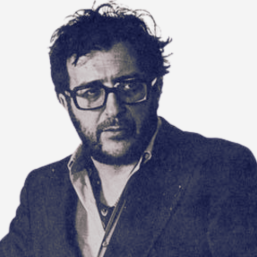
Luciano Berio (1925-2003) was one of the most important figures of post-war classical music; a composer who experimented with electronics and serialism as well as the newest sounds in vocal and instrumental tone production. Born on the Ligurian coast of Italy, Berio learned music from his father and grandfather, both organists. He aspired to be a pianist but was conscripted into the Italian army during World War II. During army training he injured his hand with a firearm, making a career as a virtuoso impossible and setting him on the path to becoming a composer and iconoclast of the avant-garde.
Berio’s music reflects his fascination with sound and the rapidly changing media of the post-war years. Electronic music was an early calling and throughout his career he integrated electronic and acoustic sounds such as in his Sinfonia of 1968. Perhaps a more important area of innovation in his music is his experiments with voice. Sinfonia is a prime example of these, featuring as it does an amplified vocal ensemble, parts first intended for the Swingle Singers, who can be heard on some recordings. Berio’s fascination with the voice was strongly influenced by his first wife, the American singer Cathy Berberian to whom he was married from 1950 until 1964. Their collaboration, however, continued long after the marriage ended.
The middle movement of Sinfonia is one of Berio’s most famous pieces, notable for its integration of the scherzo from Mahler’s Symphony No 2, upon which he created a kind of musical collage. The movement follows the thread of Mahler’s work, which is audible throughout. Mahler’s music, reorchestrated and disassembled, is interpolated with outbursts from the vocal ensemble, as well as quotes from many other famous pieces, often to humorous effect. Berio described this middle movement of the work as having a river, that is, Mahler’s scherzo, running through an ever-changing landscape, a metaphor that could be applied to many other aspects of his work.
An example of an ever-changing thread in Berio’s music is the series of works titled Sequenza. The first, for flute, was composed in1958, while Sequenza XIV, for cello, was created in 2002, just a year before Berio’s death. Each Sequenza is for a solo instrument and exploits the full range of extended instrumental techniques – all are virtuoso in their conception and execution. Many of them were later adapted into works for larger ensemble, especially the series of Chemins, the French word for path or road.
The post-war avant-garde considered themselves very much part of an ongoing trajectory of modernism in music, continuing a path from Gregorian chant through to polyphony, Baroque theatre, the Classical style and its Romantic developments, which continued into the 20th century. For this reason, Berio was fascinated by the music of the past, including the orchestration of existing works and the completion of unfinished pieces. His Renderings, for example, takes the existing fragments of Schubert’s 10th Symphony, fleshing them out in late-20th-century clothes.
Berio’s fascination with existing musical objects is found in his electro-acoustic works, such as Naturale, a piece for viola and percussion with recordings of Sicilian folk music.
The startling contrast between the rawness of the folk songs and the virtuosic sounds of the viola provides the inherent tension at the heart of the work.
Much of Berio’s music is challenging to the listener, but not all of it. Among those pieces that connect directly with the listener are the Folk Songs, a collection of songs from around the world arranged for voice and a small ensemble and his arrangement of the Beatles song, Michelle. Rendering for orchestra is quite approachable but the composer’s efforts to bring Schubert’s sketches to life are polarising.
2MBS Fine Music Sydney brings you two programs of music by Berio to mark the centenary of his birth: New Horizons, on Sunday 26 October at 9:30pm and Music of the Night on Wednesday 29 October at 10:30pm.