
By Stephen Gard
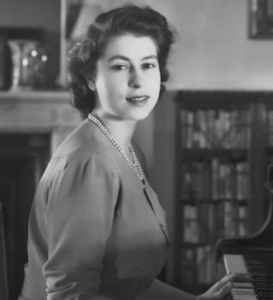
Had she matched her mother’s longevity, our gracious Queen Elizabeth II would have celebrated her 100th birthday on 21 April this year. Alas, Her Majesty is no longer among us. Not in person, though her spirit inhabits many, many hearts.
For those of us who lived during her reign, Elizabeth II was not The Queen. She was Our Queen. We knew and we owned no other sovereign. Her portrait was set high on the walls of our schoolrooms. We stood to attention for Our Queen, we sang our National Anthem at Our Queen, gazed aloft and saluted Our Queen. What she thought of all this we never learned.
Our Queen was an enigma. She never gave an interview. Protocol ruled that one never asked a question of a Royal. What we know of that most private person born Elizabeth Alexandra Mary Windsor is a potpourri of hearsay, palace gossip, guesswork, inferences drawn from speeches and official documents, editorial comment, reminiscence … with just a whiff of odium in the mix, derived no doubt from vexation at her inflexible reserve.
The reserve arose from duty, not arrogance. Raised in the British royal family’s tradition of service to the nation, service which included impartiality, Elizabeth, on assuming the crown, surrendered her private life but preserved her private self, leaving it the subject of speculation; whether accurate or not we can never know.
Lilibet
Anecdotes abound attesting to Elizabeth’s limitations when it came to appreciating the arts. Her tastes seem simple and unfeigned. Her governess, known to the family as ‘Crawfie’, revealed in The Little Princesses (1950):
Elizabeth enjoys poetry. But hers is a more conservative taste than mine. I like to read what is called modern verse. I enjoy seeing new patterns of words and experimenting with the melodies they form. But I was never able to imbue her with this enthusiasm.
‘Oh do stop!’ she would say while I was reading from the works of some modern poet. ‘I don’t understand a word of it! What is the man trying to say?’
She loves the more rhythmical jingling works of Kipling, Tennyson and Longfellow. Hiawatha was one of her favourite pieces. But They’re Changing Guard at Buckingham Palace always filled her with delight.
And:
Music lessons were started early. Miss Mabel Lander began to come regularly […] Lilibet was naturally musical and loved her lessons, but she hated to practice. Miss Lander was to find that Lilibet’s wonderful memory and good ear were great drawbacks, and kept her from learning to read [music]. She soon got a tune off by heart, and could pick out on the piano by herself the songs the barrel organs played and the butchers boys whistled.
These domestic glimpses cost Marion Crawford the royal family’s respect; when she published them they cut her dead. She was asked to vacate her Grace and Favour residence, though not required to forfeit the Commander of the Royal Victoria (CVO) awarded her in 1949 when she left the family’s service.
The common touch
In 1962 John Steinbeck went to Stockholm to receive the Nobel Prize in Literature. Following the ceremony there was a banquet hosted by the Swedish royals. Steinbeck confided in a letter:
I had the Queen [of Sweden] for my dinner partner. She is Mountbatten’s sister, with a quick and knifelike wit. I told her the poem I wrote when Elizabeth II recently fixed the name Mountbatten by choice instead of Battenburg;
When Adam toiled and Eve span,
who was then the Mountbattán?
She laughed and said she would see that it got to ER II immediately.
“But,” she said, “she won’t understand it. Completely illiterate, you know.”
The ‘Adam and Eve’ quote is from a sermon by John Ball, an English priest who played a prominent role in the Peasants’ Revolt of 1381. He was hanged, drawn and quartered. Steinbeck escaped punishment.
In 1965, ‘Til Death Do Us Part’ came to British television screens and set the viewing nation into an uproar of mirth and outrage at the pronouncements of the oafish Alf Garnett. Graham McAnn observed in Spike & Co. (2006):
One had to be unusually obtuse and impetuous to mistake Alf’s views for something the show condoned, instead of condemned.
Someone who did appreciate this distinction was none other than the Queen, who, like the rest of her immediate family, had become one of the show’s most fervent fans. ‘This is the gentleman,’ said Prince Philip, when introducing Johnny Speight to Princess Anne, ‘who writes your mother’s favourite show.’
Barrel organs and butchers’ boys. Kipling and Christopher Robin. Alf Garnett and Oklahoma. No one could accuse HRH of patrician tastes. She seemed to be in accord with the enjoyments of a good many of her subjects. They, in return, considered Elizabeth one of their own kin. When Helene Hanff, who wrote 84 Charing Cross Road, at last managed to visit England, noted in her diary:
It’s appealing how people regard the royal family as relatives, it’s a kind of Cousin-Elizabeth-and-her-husband-and-the-children attitude. So everybody feels free to criticise them, what else are relatives for? Elizabeth, Philip and Prince Charles, all very popular. Feelings mixed about Princess Anne; most people I’ve met defensive about her. You ask an Englishman:
‘What’s Princess Anne like?’ and the Englishman says:
‘Well you must remember she’s still very young, she’s new to all this, after all she’s only twenty, you can’t expect …’
And all you said was ‘What’s she like?’
Our Gracious Queen
If Princess Anne was struggling with her first taste of public life, her mother had managed it from an early age. Elgar’s Nursery Suite was composed in 1930 to mark the birth of Princess Margaret. It was dedicated to the new-born, and to her sister Princess Elizabeth, and to their mother, Elizabeth, Duchess of York. Elizabeth, aged five, was present at its première. Did she later try to pick out some of Elgar’s melodies on the piano? He was, after all, Master of the King’s Musick. The Nursery Suite became a ballet in 1932, which was revised in 1986 by Sir Frederick Ashton for Elizabeth’s 60th birthday. She, of course, attended both performances.
Oklahoma was reportedly among Elizabeth’s favourite musicals, and from it the song ‘People Will Say We’re In Love’. She attended the London première in 1947. So did one Philip Mountbatten. A somewhat covert courtship was in progress. The couple were rumoured to have enjoyed the song for its relevance to their behind-the-scenes romance.
In that year Elizabeth turned 21 and, to mark the occasion, Arnold Bax, Master of the King’s Musick, composed ‘Morning Song, Maytime in Sussex.’ To mark her coronation in 1953 Ralph Vaughan Williams composed a collection of songs which looked back to the age of an earlier Elizabeth; one who loved and, indeed, made music and danced to it, vigorously. She was wont, for example, when dancing the Italian courtly dance La Volta, to cause a minor court scandal by leaping about and showing her knees. Our Queen was rumoured to have her hems weighted to avoid such impropriety.
What did ERII think of these and other pieces, created by the finest musicians of her realm? Tributes come with sovereignty, and with leadership, celebrity, power; tributes, welcome or not. Our Gracious Queen accepted them all with the dignity and gravitas that were as unfeigned as her simple tastes. We might conclude from her elevated place in society that she had refined preferences, but this would be unfounded. If music of the highest artistic quality was composed for Elizabeth II one might conclude that she must necessarily possess the highest degree of discrimination. One might be wrong.
Consider the Queen’s choice of outfits for public occasions. Bright colours, sometimes in startling shades. A shift towards high sartorial visibility is not unknown among ladies of senior years, but for Elizabeth it was another act of courtesy. ‘The people wish to see me, so I make myself easily seen.’ How did such vivid clothing jibe with her self-effacing nature?
And what of the Royal Variety Performances? Was the content of the Queen’s choosing? Not at all, and indeed, the term ‘Variety’ was introduced to address a concern that a ‘Command Performance’ would be incorrectly perceived as a show featuring only the monarch’s favoured artists. In 1919 the Palace declared that Royal Variety Performances should ‘clearly reflect all areas of show business popular amongst the masses’ and ‘Command Performances’ lapsed.
The Duke
There were more than a few dukes in Her Majesty’s life. Apart from the one she wed, there was also Edward Kennedy ‘Duke’ Ellington, iconic African American composer, pianist and band-leader. He presented Elizabeth with a collection of his music for jazz orchestra, collated from the works of several years and entitled The Queen’s Suite.
‘The Duke’ had met Her Majesty in 1958 at The Leeds Festival, which had been established a century earlier to celebrate the grand opening of Leeds Town Hall and Queen Victoria’s historic visit to the city. Elizabeth asked Ellington one of those polite questions royalty poses on such occasions: ‘How long is it since you last visited the UK?’ The Duke gave an equally polite reply: ‘Before you were born, ma’am,’ a response which appeared to amuse both of them, knowing it was merely an exchange of courtesies. Ellington told Elizabeth that the occasion was ‘so inspiring that something musical would come out of it’. Elizabeth told him that she would be listening.
The Queen’s Suite was recorded the following year at the Duke’s expense, and Elizabeth’s disc, pressed on gold, was the only one issued. All this was achieved with the same avoidance of pomp and circumstance as Elizabeth’s courtship with the suitor who became Duke of Edinburgh, followed by the usual discreet silence. Did she enjoy her Suite?
Prince Philip, Duke of Edinburgh, was less reticent about stating his feelings. After an Elton John concert, he said ‘I wish he’d turned the microphone off.’ And as for simple tastes, he complained that at Buckingham Palace ‘I never see any home cooking – all I get is fancy stuff.’
Our Noble Queen
Was this also Her Majesty’s private opinion about much of the ‘fancy’ music that was composed in her honour? Master of the Queen’s Music Sir Peter Maxwell-Davies learned that the Queen disapproved of dissonance in ‘public’ music, declaring that it appealed to a minority and was therefore a discourtesy to the mass of her people. This leaves again unanswered the question of exactly which music she did like.
Maxwell-Davies’ successor, Dame Judith Weir, learned that the Queen knew a considerable amount about the traditional music of worship and ceremony – pomp and circumstance indeed. Weir saw that this arose from a lifetime of Her Majesty’s church-going and her attendance at many occasions of rejoicing or remembrance. Once again, we cannot know if Elizabeth preferred such music, or knew it only as an accustomed companion and a necessary part of her duties.
Your servant, Elizabeth, by Cheryl Frances-Hoad, was commissioned by BBC Radio 3 to celebrate the platinum jubilee of Elizabeth’s reign. It was first performed by the BBC Singers and BBC Concert Orchestra at the BBC Proms on 22 July 2022. The work promised something unique: a text incorporating words written by Her Majesty Queen Elizabeth II herself. Perhaps at last we would learn something of her private and most heart-felt thoughts.
Alas, the text was merely her short public statement made in 1947, when, having turned 21, Elizabeth recorded a broadcast that included her reading the words: ‘I declare before you all that my whole life, whether it be long or short, shall be devoted to your service.’ She renewed that vow in 2022.
Her subsequent reign as our monarch left no doubt of her sincerity. What we can’t be certain of is who wrote that speech, which touched on a number of topics. The Palace employs staff to prepare official statements, though doubtless these are outlined and vetted by those who will, in some manner, endorse the content as their own.
An enigma to the end, Our Queen kept her own counsel. Whether or not she admired what was composed in her honour, she will have known that such works enriched her nation. In paying homage to their sovereign, splendid music created by the finest composers also paid tribute to the people she had promised to serve. Noblesse oblige.