
From the Archives
This article was published in the November 2021 issue of Fine Music Magazine.
Lovers of classical music are facing an existential crisis: wondering how to make it relevant to a 21st-century audience. No yielding, bending or twisting will help it comply with the gender and racial diversity standards we have come to expect in other areas.
In 2020 the Australia Council posed the question: ‘Do our arts reflect us?’ Opinions are divided over the answer in the case of classical music. There are those who point to the undeniable fact that the bulk of music played in concert halls was composed by dead white men. Their answer is, therefore, ‘No’ and they want this to be rectified by the programming of works which better reflect the diverse makeup of contemporary Australia.
Others claim that audiences will be alienated if programming strays too far from the classics listeners have come to expect and love (an argument supported by the music that dominates the ABC’s annual Classic 100 countdown). Somewhere in between are those who hope that classical music might transcend these concerns. These people do not deny that there should be diversity and that new commissions should help bring to the stage voices previously unheard, but to them the wonder of classical music is that the works have become mightier than the men who wrote them: they are classics because they are timeless.
Freed from the constraints of language, one need never contemplate the gender, race or religion of the composer of an instrumental piece. For many, this facility to divorce a work from its creator allows them to claim it as their own and the diversity issue is territory they have no wish to explore.
Until they must … for occasionally even this middle group (which some may call hopeful, others blinkered) is forced to face history. That is the case when the classical music world celebrates a significant anniversary. In 2020 the world went wild for Beethoven, commemorating 250 years since his birth.
The composer of some of the world’s most beloved works became, for a time, the man from Bonn. We learnt about his life and its many travails, stoked the flames of the debate about whether he met Mozart, and dug out lesser-known works from his three composition periods. Then, when 17 December had come and gone, we switched off the spotlight and allowed Beethoven to go back to being more of a composer and less of a man, while, as broadcasters, tracking which of those lesser-known works we might like to play again, in deference to our diverse programming considerations.
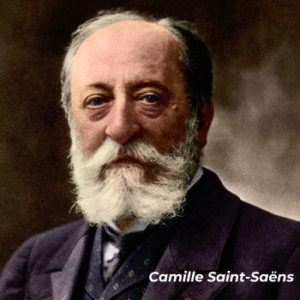
This December, which marks 100 years since his death, the spotlight is turned on Camille Saint-Saëns. If you are surprised to learn that Saint-Saëns lived two decades into the 20th century you’re not alone – his music is such a bastion of 19th-century ideals it is almost impossible to imagine him rubbing shoulders with Schoenberg or Stravinsky.
Conversely, Saint-Saëns maintained such a presence on the world stage that when he died the music world marvelled to realise that, in the words of his obituary writer, ‘He was only two years younger than Brahms, five years older than Tchaikovsky, and six years older than Dvořák.’
At 86 he had outlived them all by more than 17 years. With him died the music traditions those men had helped shape and Saint-Saëns had defended as if they were an ethic. That is how he is remembered; not as a composer with a distinctive style but as a champion of a tradition he felt was under threat. A century on, and reflecting upon our own questions about the future of classical music, it is interesting to review this assessment.
Charles-Camille Saint-Saëns was born on 9 October 1835. His father, Victor, an official in the French Ministry of the Interior, died of consumption when Camille was only a few months old. Concerned for her son’s health, Clémence Saint-Saëns took the infant to the countryside, where he spent two years being cared for by a nurse. Upon returning to Paris, Camille lived with his mother and her widowed aunt, Charlotte Masson, who taught him the basics of piano playing. Camille, it is said, was a child prodigy but his mother, worried about the price of fame, did not let him perform publicly until he was ten. This may have stood him in good stead, for alongside his piano playing, Camille began lessons in composition.
By Nicky Gluch
Related program: The Romantic Century: Friends of Saint-Saens, Thursday 4 December at 8pm