
By Susan Foulcher
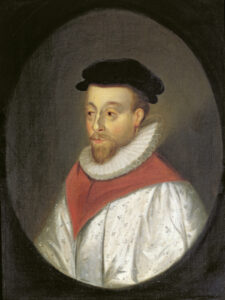
What is it about Orlando Gibbons that made him Glenn Gould’s favourite composer? Gibbons, who died 400 years ago, on 5 June 1625, was the best-known member of a musical family dynasty, a leading composer of vocal, consort and keyboard music and a transitional figure between the Renaissance and Baroque periods.
Something of a phenomenon in terms of his virtuosic prowess as a keyboard player, Gibbons’s reputation gained him a position as organist in the Chapel Royal at only 21. Yet it is vocal music for which he is best known now, with some of his services and anthems included as a constant part of the English cathedral repertoire and his madrigals considered masterpieces of the late madrigalist style.
Gibbons, one of the last masters of the English Virginalist and Madrigal schools, was also one of the first composers to write solely for the reformed church. Moving forward at a time of momentous religious upheaval he was able to build on the recent foundations of the new Anglican music to become one of the great masters of its forms, particularly that of the verse anthem, which contrasts verses sung by solo voices with passages for full choir.
This is the record of John and See, see, the Word is incarnate are wonderful examples of this genre. As Catholicism became increasingly weak Gibbons never set Latin texts, only those in his native English, and it is said that his unique genius lay in telling stories to music, both sacred and secular. His sacred compositions are also known for providing supremely crafted endings, with ‘amens’ of gathering intensity that represent the emotive highpoints of his works. His outstanding Second Service is an extended work combining both verse and full sections and his full anthem, O clap your hands together, is a contrapuntal tour de force with an infectious sense of exuberance.
With English church music in a period of tumultuous change and the spotlight on Italy and the new Baroque use of keyboard as an element of continuo accompaniment, the new directions charted by Gibbons in his abstract keyboard and instrumental fantasias have often been neglected. His innovative keyboard compositions, which developed a newness of tonal language, resonated with amateur and professional musicians alike and were adopted, played and loved to such a degree that they became part of the dominant musical language of Baroque instrumental style.
Perhaps it is this that accounts for Glenn Gould’s decided preference. Gibbons was the youngest contributor to the first collection of English keyboard music ever printed – Parthenia – a 1612 publication he shared with William Byrd and John Bull, which proved influential and popular. It’s always been considered that Gibbons, 29 at the time, was punching above his musical weight in company with Byrd and Bull, yet it was his Prelude in G from Parthenia that was the most copied piece in English keyboard sources during the entire 17th century.
Gibbons also wrote about 40 pieces of consort music; fantasias, in nomines and dance pieces. It is possible that the reason for this was that from 1617 he was the only keyboard player in an amazing ensemble of musicians in the privy chamber of Prince Charles (later King Charles I). The company, assembled by John Coprario, included Alfonso Ferrabosco the younger, Thomas Ford, Robert Johnson and Thomas Lupo. It is said that the prince himself occasionally joined in on bass viol. His three-part consort pieces were published in 1620 but about half of his consort output, including some impressive six-part works, had to wait a further 350 years to be published.
Gibbons’ mastery of polyphonic forms made him an outstanding madrigalist. His Madrigals and Motetts, published in 1612, contained gems like The silver swanne, Nay let me weep, What is our life? and O that the learned poets of this time – a collection of quite severe solemnity, and all written before he was 30.
The silver swanne, which has been described as ‘the most perfect thing of its kind’, was certainly Gibbons best-known song and perhaps the most famous of all the English madrigals. Because Gibbons is known to have composed his work in the London house of his patron, Christopher Hatton, who seems to have become a personal friend, it has long been speculated that Hatton wrote at least some of the texts set by Gibbons in this collection. His madrigals illustrate beautifully his strength as a setter of English words.
Gibbons’ music gives the firm impression that he was a serious man whose contemplation of life drew him to linger on profound thoughts, whether he was writing sacred or secular music. He wrote with a reserved style and a profound sincerity and was known as ‘The English Palestrina’. He was well liked by people in high places, notably King James I and Prince/King Charles I, with his precocious musical skill bringing him high regard and prestigious positions at a young age.
Famed as a keyboard player, he was said to be without rival in England as an organist and virginalist – the ‘best finger of that age’ and ‘the best hand in England’. His sudden death at the height of his powers, apparently from a stroke, was precisely observed, described and investigated by his doctors – this interest possibly a measure of his closeness to the new king, who had benefited from Orlando Gibbons’ musical genius in both his court and his personal chambers, throughout the composer’s short, but impressive, career.
Tune in to Baroque and Before at 10pm on Friday 6 June to hear Gibbons’ renowned ‘Second Service’, ‘The silver swanne’ (among other madrigals), two of his ‘Fantasias with the great dooble [sic] bass’, and other of his best-known keyboard works.