
By Rex Burgess
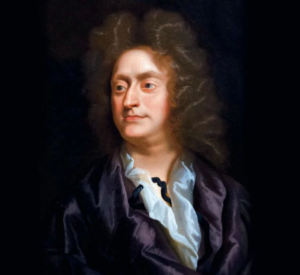
Born between June and November 1659, just before the restoration of the monarchy in 1660, Henry Purcell, singer, organist, composer and teacher, was one of the finest musicians of the baroque era, and arguably the greatest English composer of all time. His nickname, Orpheus Britannicus, reflected the recognition of his genius as a composer and, especially, his writing for the voice.
Unlike many of his contemporaries, Purcell had the good fortune never to sink without trace from the musical horizon during the two hundred years in which baroque music was either misunderstood, treated as an antiquarian curiosity, or else despised and ignored completely. He was not restored to greatness in the manner of composers such as Vivaldi and Charpentier because he had never entirely forfeited his position as the gifted author of a voluminous oeuvre, at least some of which was always available for performance, listening and study.
So writes Jonathan Keates in Purcell, a Biography, noting that later baroque masters such as Bach and Telemann also descended into obscurity, though Bach had an earlier reprieve at the hands of the young Felix Mendelssohn.
Another factor is that in the17th century there was little interest in composers’ past works: the nature of their employment obliged them to fulfil an unceasing demand for new ones. So it is hardly surprising that the more fecund composers such as Purcell, Vivaldi, Charpentier and others , created hundreds of works while the output of Bach and Telemann totalled a thousand or more, many of which were quite possibly only performed once or twice, either publicly or privately.
Purcell began his career as a chorister in the Chapel Royal, where the boys were also encouraged to compose, which makes it quite credible that by the age of eight he was already writing songs: one h, Sweet tryanness, was included in a collection issued by Playford in 1667 and later republished as a single song by Purcell himself.
His first teacher was Captain Henry Cooke, followed by Cooke’s pupil, Pelham Humfrey, and, for keyboard, Christopher Gibbons, the son of Orlando Gibbons, whose works Purcell studied, along with those of Matthew Locke, especially his stage works. Despite a ten year difference in their ages, Purcell and John Blow forged a close and enduring relationship, akin to that between Haydn and Mozart a century later, with the younger man initially being influenced by and then later influencing the older one.
Upon leaving the Chapel Royal in 1673 when his voice broke, Purcell was engaged as assistant to the master of the king’s instruments, John Hingeston. And while he received no payment, presumably being supported by his comfortably-placed surrogate father, Thomas, himself a court musician, as Keates observes: ‘the experience of dealing with the technical aspects of individual instruments must have
been invaluable, and the inclusion of flutes and recorders in the list reminds us of his extremely sensitive use of the latter, especially in his odes and dramatic works.’
Purcell worked as organ tuner at Westminster Abbey for the next four years, during which he probably had lessons from Blow, the then incumbent, and derived some income from copying organ parts. In 1677 he was appointed to succeed Locke as composer-in-ordinary for the king’s violins. J A Westrup, in Purcell, describes the significance of this appointment:
It did not guarantee a reputation; he had yet to make his name as a composer. But he now had constant opportunities for perfecting himself in his art, and the duty of composing for him must have done what residence at Eisenstadt did for Haydn at a more mature age.
Purcell remained with the court throughout his life, serving under three monarchs and writing 24 royal odes for various occasions between 1680 and 1694, works which, when taken together, according to Westrup, reveal ‘continuous evidence of progress’ in the development of his own intrinsic style.
While his reasons remain unclear, in 1679 Blow surrendered his post at Westminster Abbey to his young friend. In 1682 Purcell also became one of the organists at the Chapel Royal, which required him to participate as a member of the choir. Then, upon the death of When Hingeston died, in 1683, he succeeded him as keeper of the king’s instruments, an appointment that carried considerable responsibility and was by no means a sinecure.
The fact that Purcell held several important posts simultaneously draws attention to an interesting aspect of English musical life at that time. Unlike in Europe, where a musician normally worked for a single patron or institution, there was no equivalent practice in England. So it comes as no surprise, as Henry Raynor points out in A Social History of Music, that during his career Purcell ‘wrote for the court, for Westminster Abbey, for the theatres, and for any other patron or group of individuals which might commission work from him.’
Such was his versatility that, although vocal music was his forte and he wrote hundreds of songs, anthems, odes and other such works both sacred and secular, he was equally able in non-vocal genres, writing some 50 works for strings and winds and a similar number of keyboard pieces, mainly for harpsichord.
In Music in the Baroque Era Manfred Bukofzer observes that contrary to the oft-repeated statement that Purcell ‘rekindled the fire of English music after the golden age of the madrigalists’, arguing instead that ‘as the true genius of the Restoration he appeared at a time when he could bring to consummation the divergent tendencies of the English middle baroque, just before the wave of Italian late baroque style rolled over England.’
The inference is that rather than kicking over the traces, so to speak, Purcell accepted the conventions and mannerisms of Restoration society and remained content to work
within those constraints. This explains a certain preoccupation with sensuous and sonorous effects, which were the primary focus of court music at that time. He was content also to use the forms that lay readily at hand. And while in later years he had recourse to elements of the Italian and French styles, as Burkofzer points out: ‘… in their adoption he always remained his own inimitable self.’
Purcell’s first publication in his own right appeared in 1683: a set of 12 sonatas for two violins and continuo. Other works were published sporadically, with only a fraction of his output appearing during his lifetime, due to the high cost of printing music.
His compositions may be divided into four groups: instrumental music, dating mostly from the early 1680’s; anthems and other sacred music, belonging mainly to the years up to 1685; odes and songs of various kinds, written continuously throughout his career and stage works, beginning in 1680 with Theodosius.
Most of these works, though, date from his final years, beginning in 1689 with the first of his six operas/semi-operas, Dido and Aeneas, and thereafter occupying him through to his premature death from a fatal chill or possibly tuberculosis. The entire musical community was devastated by the news of his death and he was ceremoniously laid to rest in Westminster Abbey to the sound of his own music on the evening of 26 November 1695. He was just 36 years old.
Listen to In Early Times, The Baroque in Britain: Tuesday 10 February 2026 at 1pm or on demand