
The Australian World Record Club – Part 2 The early years
By David Edmonds
The first article in this series was published in Fine Music in September 2025 (click here to read the full series). The Australian branch of the WRC was established in 1957 and closed its doors in 1976.
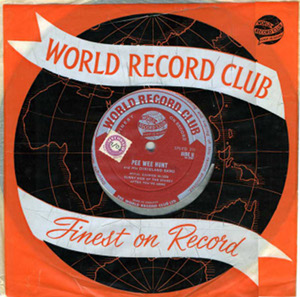
Operation
From the outset the WRC operated on an annual subscription basis where forthcoming releases could be pre-ordered. I seem to remember that some 3 records were issued on a monthly basis with the opportunity of bonus purchase for a proportionate number of subscription purchases.
The Wikipedia article on the Australian WRC notes that in 1963, WRC records sold for 35 shillings (Aus$3.50) or 37 shillings and sixpence (Aus$3.75) if posted. Equivalent discs in commercial record stores sold for 57 shillings and sixpence ($5.75). By 1970 the price per disc had actually fallen slightly to $3.39, plus 30 cents packing and postage. Related, Wikipedia also notes that Subscribers were encouraged to order multiple records per month, with bonus Dividend LPs being offered at a rate of one per three monthly pre-selections. Though the Dividend LPs were offered at a bargain price of only 15 shillings each (Aus$1.50), their quality was equivalent to that of the regular issues.
My memory is that such bonuses included artists such as Constantine Silvestri conducting the Orchestre National de la Radio Diffusion Française in Tchaikowsky Manfred Symphony, Rudolf Kempe and Berlin Philharmonic playing Beethoven overtures, David Oistrakh playing Mozart sonatas, Sampson Francois playing the Liszt and Chopin 1st concertos and a young Vladimir Ashkenazy playing Chopin’s 3rd sonata, among many others.
The records were either posted or collected. In Sydney the collection shops were in the city, initially at 47 Clarence St, then briefly at 134 Castlereagh St, then 177 Elizabeth St over the remaining lifetime of the Club.
Early releases
Artists
Two of the three major classical orchestral performers were European based, viz Vittorio Gui conducting the Florence May Festival Orchestra and Hans Swarowsky with variously named Viennese orchestras. Gui was a significant opera performing and recording artist in England during the 1950s and Swarowsky a major Viennese conductor and significant teacher whose pupils included Zubin Mehta and Claudio Abbado and many other notable conductors of the second half of the 20th century. (Descriptions of both are found in Wikipedia and Gramophone issue November 2020 and January 2020 respectively.)
The third most regular conductor was Muir Matherson with a London pickup orchestra, The Sinfonia of London. Other artists included a conductorless NBC Symphony Orchestra, post Toscanini and British conductors such as Anthony Collins and a young Colin Davis.
Repertoire
Among many early releases. Beethoven was well represented with repertoire including the 2nd, 5th, 6th and 8 symphonies and Emperor concerto, Swarowsky/Vienna State Orchestra and the last with Hans Kann (pianist) and UK pianist Joesph Cooper with the Pathetique, Moonlight and Appassionata. Gui was represented by shorter works, such as Wagner overtures, Schubert’s Unfinished symphony and Debussy’s Afternoon of the Faun and Mathieson presented Tchaikowsky’s 6th symphony, Carmen suite.
Catalogue expansion from early 1960s
During this period, EMI (Electric and Musical Industries Ltd) distributed its perceived best selling repertoire and artists through normal retail outlets. Examples are Klemperer’s Beethoven cycle, Beecham’s Symphonie Fantastique and Carmen, and other major operas such as Giulini’s Figaro and Don Giovanni and Kelmerer’s Fidelio. As can be seen in the following table, EMI had a galaxy of major recording artists and orchestras.
These artists’ and other major artists’ recordings of expected lower sales items were manufactured and distributed under the WRC label. Indeed, the turning point of the Australian WRC was the early licensing and distribution rights to major labels such as EMI’s subsidiaries of (British) HMV, Columbia, L’Oiseau-Lyre and Parlophone, (German) Electrola, (US) Capitol and Everest and (French) Erato. This enabled a most significant expansion of choice featuring both mainstream and less mainstream repertoire and artists.
As an example, the Beethoven Emperor concerto featuring Claudio Arrau (piano) Alceo Galliera (conductor) and the Philharmonia Orchestra was a mainstream release but their versions of Beethoven 1 and 3 were through WRC.
Artists and Repertoire
As previously noted, this period of the 50s and early 60s was the Golden Age of recording. In addition, historical performances from the 1920s, 30s and 40s were able to be remastered onto vinyl. WRC issued under the WRC label itself for mainstream repertoire and also using other labels, Record Society and Connoisseur. The Record Society issued what was seen at the time as more specialist repertoire such as Lieder, Chamber Music, music of the Bach and of the pre-Bach era and even Mahler. Connoisseur was for historical recordings from the 78 r.p.m. and early mono era, this label subsequently being re-branded in the later 60s to Retrospect.
Under the WRC label, many early EMI releases included mid-fifties mono recordings such as Karajan/Philharmonia Berlioz Symphonie Fantastique and Cosi Fan Tutte, Małcużyński /Philharmonia Rachmaninoff’s 3rd piano concerto, and most importantly, Carl Schuricht’s Beethoven 9th symphony with the Paris Conservatoire Orchestra and distinguished soloists.
In particular, the availability of recorded opera to an Australia starved of opera in the 50s and 60s was a most important niche to be filled. Not only was major repertoire released, I remember that rarer operas such as Yuri Shaporin’s The Decembrists also featured.
A table of some of the issues follows. This is a sample only of a much larger number of issues but demonstrates the breadth of the repertoire, quality of performers and sourced overseas labels.
| Artist | Associate artists | Composer | Work | Original recording label | WRC label |
| Claudio Arrau (piano) | Galliera/Philharmonia | Tchaikowsky/Weber | Piano Concerto 1/Konzertstück | Columbia | WRC |
| Vladimir Ashekenazy (piano) | Chopin | Sonata 3 and various | Columbia | WRC |
| Sir Thomas Beecham (conductor) | Royal Philharmonic | Beethoven | Mass in C | HMV | WRC | |
| Orchestre National de la Radio diffusion Française | Bizet | Symphony in C | HMV | WRC | ||
| Royal Philharmonic | Hadyn | London Symphonies 93 to 104 6 LPs | HMV | WRC | ||
| Royal Philharmonic | Schubert | Symphonies 3 & 5 | HMV | WRC | ||
| Royal Philharmonic | Tchaikowsky | Symphony 4 | HMV | WRC | ||
| Sir Adrian Boult (conductor) | Philomusica of Music, Sutherland, Pears, Brannigan | Handel | Acis and Galatea | L’Oiseau-Lyre | WRC Boxed set | |
| Pablo Casals (cello) | Bach | Cello suites 1 to 6 | HMV | Record Society | ||
| Shura Cherkassky (piano) | Schubert | Sonata in A D959 | HMV | WRC | ||
| Alfred Cortot (piano) | Chopin | Preludes and Impromtus | HMV | Connoisseur | ||
| Colin Davis (conductor) | Morrison, Cameron, Veasey, Cantelo, Watts. London Symphony | Berlioz | Beatrice and Benedict | L’Oiseau-Lyre | WRC | |
| Pears, Fleet, Morrison, Rouleau. Goldsborough | Berlioz | L’Enfance du Christ | L’Oiseau-Lyre | WRC | ||
| Desire Dondeyne (conductor) | Musique des Gardiens de la Paix | Berlioz | Grande Symphonie funèbre et Triomphale | Erato | WRC | |
| Dietrich Fischer-Dieskau (baritone) | Schubert | Lieder | HMV | Record Society | ||
| Schech, Frick, Wunderlich, Konwitschny, Staatskapelle Berlin | Wagner | Flying Dutchman | HMV | WRC | ||
| Pierre Fournier (cello) | Schumann/Tchaikowsky | Cello concerto/Roccoco variations | Columbia | WRC | ||
| Fernando Germani (organ) | Bach | Organ works (4 LPs) | HMV | WRC | ||
| Emil Gilels (piano) | Ludwig/Philharmonia | Beethoven | Piano Concerto 4 | Columbia | WRC | |
| Artist | Associate artists | Composer | Work | Original recording label | WRC label | |
| Carlo Maria Giulini (conductor) | Philharmonia | Tchaikowsky | Symphony 2 | Columbia | WRC | |
| Philharmonia | Tchaikowsky | Symphony 6 | Columbia | WRC | ||
| Philharmonia | Stravinsky/Bizet/Ravel | Firebird suite/Children’s Games/Mother Goose suite | Columbia | WRC | ||
| Herbert Von Karajan (conductor) | Schwarzkopf, Ludwig, Gedda, Zaccaria. Philharmonia | Beethoven | Missa Solemnis | Columbia | WRC | |
| Joseph Keilberth | Grummer, Schock, Berlin Philharmonic | Weber | Der Freischütz | Electrola | WRC Boxed set | |
| Boris Khaikin (conductor) | Vishnefskaya, Belov, Lemeshe, Petrov, Bolshoi Orchestra | Tchaikowsky | Eugene Onegin | Parlophone* | WRC Boxed set | |
| Rudolf Kempe (conductor) | Berlin Philharmonic | Beethoven | Overtures | HMV | WRC | |
| Tchaikowsky | Symphony 5 | HMV | WRC | |||
| Otto Klemperer (conductor) | Philharmonia | Brahms | Symphony 1 | Columbia | WRC | |
| Philharmonia | Mozart | Symphony 25 & 40 | Columbia | WRC | ||
| Paul Kletski (conductor) | Philharmonia | Tchaikowsky | Francesca da Rimini/1812/March Slav | Columbia | WRC | |
| Josef Krips | London Symphony | Beethoven | Symphonies 1-9 | Everest | WRC | |
| Wanda Landowska (harpsichord) | Bach | Italian concerto and others | HMV | Connoisseur | ||
| Dinu Lipatti (Piano) | Bach/Mozart/Schubert/ Chopin | Last piano recital Besançon Festival | Columbia | Connoisseur | ||
| Witold Małcużyński | Susskind, Philharmonia | Liszt | Piano concertos 1 and 2 | Columbia | WRC | |
| Igor Markevitch (conductor) | Philharmonia | Various Symphonic waltzes | Columbia | WRC | ||
| Nathan Milstein (violin) | Steinberg/Pittsburgh Symphony | Tchaikowsky | Violin concerto | Capitol | WRC | |
| Jean-François Paillard (conductor) | Jean-François Paillard Orchestra | Bach | Brandenburg Concertos 1 to 6 | Erato | WRC | |
| Jean-François Paillard Orchestra | Bach | Suites 1 to 4 | Erato | WRC | ||
| Hans Richter-Hasser (piano) | Kertesz/Philharmonia | Beethoven | Piano Concerto 4 | HMV | WRC | |
| Wolfgang Sawallich (conductor) | Philharmonia | Weber | Overtures | Columbia | WRC | |
| Arthur Schnabel (piano) | Galliera/Philharmonia | Beethoven | Piano Concerto 5 | HMV | Connoisseur | |
| Galliera/Philharmonia | Beethoven | Piano Concerto 5 | HMV | Connoisseur | ||
| Constantine Silvestri (conductor) | Orchestre National de la Radio diffusion Française | Tchaikowsky | Manfred symphony | HMV | WRC | |
| *Original recording likely (USSR) Melodya | ||||||
| Artist | Associate artists | Composer | Work | Original recording label | WRC label | |
| William Steinberg (conductor) | Pittsburgh Symphony | Beethoven | Symphony 7 | Capitol | WRC | |
| Pittsburgh Symphony | Mendelssohn | Symphony 4 | Capitol | WRC | ||
| Leopold Stokowski (conductor) | Stadium Symphony Orchestra of New York | Tchaikowsky | Francesca da Rimini/Hamlet | Everest | WRC | |
| Arturo Toscanini (conductor) | BBC Symphony | Beethoven | Symphony 4, Leonore 1 | HMV | Connoisseur | |
| BBC Symphony | Beethoven | Symphony 6 | HMV | Connoisseur | ||
| Various | Various | Various | Music in Old Towns and Residences | Electrola | Record Society | |
A number of these listed remain reference recordings that have stood the test of time, such as the Karajan Rosenkavalier, Klemperer Brahms 1 symphony, Beecham Schubert symphonies, Gilels Beethoven 4 concerto and Schnabel Beethoven piano sonatas. Almost all performances listed have been re-issued on CD at one or multiple times.
This era coincided with considerable changes and expansion within the music reproduction industry. Bill Haley and the Comets launched Rock and Roll internationally with Rock Around the Clock in the mid 50s. This was rapidly followed by The Beatles, The Rolling Stones et al and Folk, with the music and lyrics of Bob Dylan, Peter Paul and Mary, Joan Baez and others. Of a different genre but very popular were the musicals of Lerner and Loewe, Rodgers and Hammerstein and similar others. Jazz was longer established but featured such internationally renowned artists such as Dave Brubeck, John Coltrane, Miles Davis and, of course many others again.
The price of LPs became affordable for the consumer and good sound reproduction equipment became essential. This included turntable, stylus, tone arm, amplifier and loudspeakers for LPs, all having an effect on the final reproduction. Almost by necessity, all components continued to be improved with significant increases on brands from numerous countries, ranges within brands and price choices.
Combined with a lack of live performances in Sydney and elsewhere in Australia, especially chamber music and opera, consumers enthusiastically embraced the broader and more esoteric repertoire and range of performers provided by LPs. As I hope I have described, WRC seized an opportunity in this period to provide a quality product to satisfy this market in repertoire, performers, sound quality and presentation and not least, price.
The next article of this series describes the presentations of the LPs in the same early years of the classical sector of WRC.
References
Wikipedia
History of WRC
World Record Club UK and Australia
Please click HERE to read part 1,3,4 and 5