
David Brett profiles Alan Hovhaness
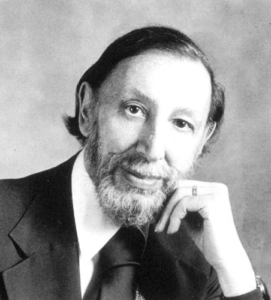
Let’s start with a musical trivia question: Which composer wrote the most symphonies during the 20thcentury?
Answer: Alan Hovhaness, who published no fewer than 67 symphonies, composed between 1932 and 1992.
Alan who? You might well ask, since Hovhaness is little known, at least outside his native United States.
Hovhaness was born in Massachusetts in 1911, the son of an Armenian father who had emigrated to the US and married an American woman of Scottish descent. He showed early musical ability and, even as a boy, was writing complex music. After high school he studied at the New England Conservatory of Music and won the composition prize there in 1932.
In 1942 Hovhaness won a scholarship to study at the prestigious Tanglewood Festival in New York state. During a seminar a recording was played of his First Symphony. Two giants of American music, Leonard Bernstein and Aaron Copland, were in the audience. Openly contemptuous of the piece, they labelled it ‘cheap ghetto music’. Distraught, Hovhaness immediately left Tanglewood and subsequently destroyed much of the music he had written to that point.
Fortunately for us he did not despair but began again. However, for the rest of his life, he remained wary of the American musical establishment. He developed his unique style with his own influences – and stayed clear of contemporary trends, like the influence of the American west, jazz or twelve-tone serialism.
Appointed as organist at the St James Armenian Church in Watertown, Massachusetts in 1940, Hovhaness looked to his Armenian heritage and for the next few years his music was strongly influenced by ancient Armenian folk music, producing works such as Armenian Rhapsody and Khrimian Harrig.
Not surprisingly, given his experience at Tanglewood, it was 1955 before Hovhaness returned to symphonic composition. His Second Symphony, subtitled Mysterious Mountain and written 23 years after his first, was his breakthrough piece when it was premiered then recorded by Leopold Stokowski conducting the Houston Symphony Orchestra. This success opened the floodgates, with symphonies flowing from his pen, usually in groups, but averaging two a year for the next three decades.
In 1959 Hovhaness began a series of journeys to India, Hawaii, Japan and South Korea, specifically to study traditional indigenous music and, in the process, learning how to play many traditional instruments.
This four-year odyssey was to prove a rich source of inspiration for his own music during his later years. Two examples are Fantasy on Japanese Woodprints a concerto for xylophone and orchestra (1965) and Nagooran (1960), scored for a traditional Indian orchestra. The influence flowed also into his symphonic writing – His Sixteenth Symphony included parts for six traditional Korean instruments.
Hovhaness married his sixth wife, (there’s another story) the Japanese coloratura soprano, Hinako Fujihara, in 1977, when he was 66 and she 45. He wrote music to feature her exceptionally high register voice, for example, Symphony No 31. Together, they formed recording and publishing companies, which gave Hovhaness independent control over his output and financial security for his later years.
Another influence on his work was his love of mountains. As a young man he enjoyed hiking in the Appalachians. He explored the mountains of Asia on his trips and, in later life, having moved to Seattle, he loved the views of the Rockies. Mysterious Mountain was followed over the years by dozens more works incorporating references to mountains.
He was, however, no landscape impressionist – for him the influence of mountains was spiritual, he saw them as places of peace, serenity and, perhaps, where, in the Jewish tradition, he could be closer to God. His penultimate symphony, No 66, written in 1991, was subtitled Hymn to Glacier Peak, a mountain he could see every day from his study window.
Hovhaness died in 2000, aged 89. While he received honours and recognition, he remained outside the American mainstream and was thus unknown to many. He was a unique talent and has left a unique legacy. His wife championed his music until her own death in 2023 and, in the 21st century, his multicultural approach to music is more in tune with today’s fashion so he is becoming one of the more frequently performed American composers.
Related program: Listen on demand The life of a Composer broadcasted on Saturday 21 December at 8pm.