
By Chris Blower
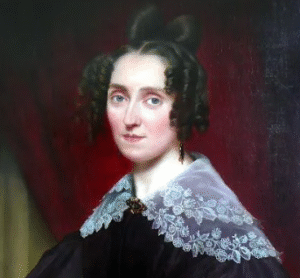
The Conservatoire National Supérieur de Musique et de Danse de Paris, better known as the Conservatoire de Paris, was a creature of its time, the first half of the 19th century. An almost exclusively male bastion, it admitted women only to learn to play the piano, a sufficiently lady-like pursuit to be tolerated. One woman, however, beat the system, not only being appointed Professor of Piano, a post she held for 30 years, but also campaigning successfully for equal pay with her male counterparts.
Jeanne-Louise Dumont was born into the Parisian artistic milieu on 31 May 1804, the daughter of Jacques-Edme Dumont, a successful sculptor. Her brother, Augustin, was also a sculptor, one of his better-known works being the Winged Mercury in the Place de la Concorde.
Louise began piano studies at an early age and, when it became clear that she had the ability to become a professional pianist, was given lessons by such masters as Moscheles and Hummel. She also showed talent as a composer and in 1819, at the age of 15, she began to study composition with Anton Reicha, the composition professor at the Conservatoire. However, as women were not allowed into the traditional composition classes, she had private lessons.
In 1821 she married Aristide Farrenc, a flute student who performed at concerts at the Sorbonne and initially the two toured and performed throughout France. They soon gave up the concert life, however, and Aristide founded a publishing company in Paris. Éditions Farrenc was to become one of France’s leading music publishers for nearly 40 years.
Back in Paris, Louise resumed her studies with Reicha and re-embarked on a concert career. In 1826 she gave birth to a daughter, Victorine, who also became a concert pianist.
In the 1830s Louise gained considerable fame as a performer. In 1842 she was appointed to the permanent position of Professor of Piano at the Paris Conservatory, one of the most prestigious positions in Europe at the time. Although contemporary accounts suggest that she was an excellent teacher, she was paid less than her male counterparts for nearly a decade. Only after the acclaimed premiere of her nonet did she demand and receive equal pay.
In addition to teaching and performing she wrote and edited a book, Le Trésor des pianistes, about early music performance style.
Although originally Louise composed for the piano alone, she branched out in the 1830s to chamber and orchestral works, writing for various combinations of winds, strings and piano. She twice won the prestigious Prix Chartier for chamber music, later also awarded to Edouard Lalo, Cesar Franck and Gabriel Fauré. She also wrote two overtures and three symphonies.
Although after her death her nonet, her two piano quintets and her trios continued to be performed sporadically, her compositions were largely forgotten. It was only in the late 20th century that an interest in women composers led to the rediscovery, performance and recording of her music.
The life and work of this remarkable woman will be celebrated on this, the 150th anniversary of her death in September 1875.
Related program: Sunday Special, Through the Glass Ceiling, Sunday 14 September at 3pm